10 Modern Table Centerpiece Ideas for 2026
If you've spent weeks searching for modern table centerpieces and all you find are generic vases or floral arrangements that look straight out of a nineties catalogue, you're not alone. Table décor has changed. In 2026, the trends move away from the overdone and embrace pieces made of real materials, careful proportions and a personality that isn't repeated in every house on the block. What matters is no longer filling the centre of the table, but choosing what deserves to be there.
In this guide you'll find ten concrete ideas, organised by style and material, so you can pick the one that suits your dining room, your daily life and the way you host at home.
See Italian table centerpieces
What defines a modern table centerpiece in 2026
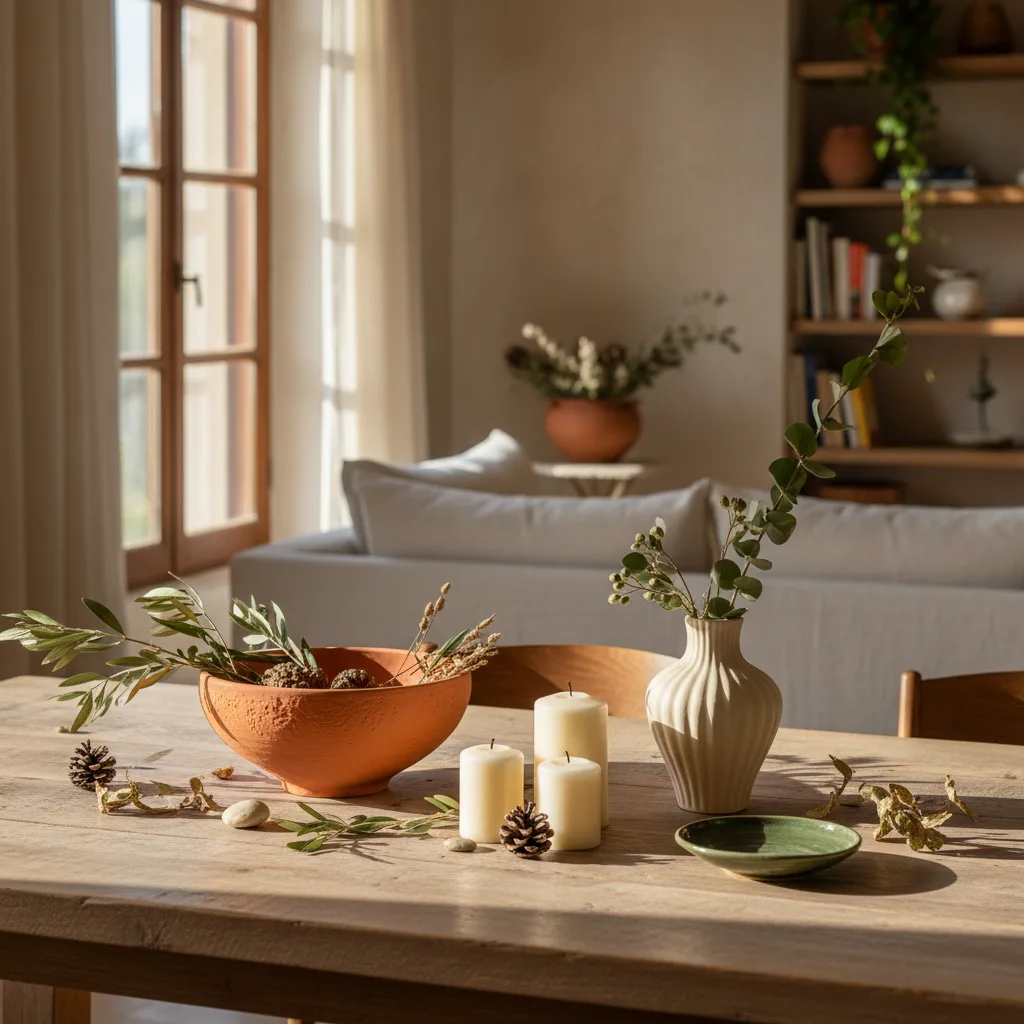
Before we get into the ideas, it's worth understanding what has changed. This year's dominant trend can be summed up in three words: warmth, proportion and authenticity. Modern table centerpieces in 2026 don't aim to impress with size or shine. They aim to create a visual focal point that accompanies the conversation without interrupting it, that adds texture without stealing the spotlight from the food or the people.
The materials that rule are natural ones: handcrafted ceramic, untreated wood, blown glass, linen, stone. The colour palette abandons cold greys and clinical whites to embrace earthy tones —sand, terracotta, olive green, ochre— that create that sense of a lived-in table, not a magazine table. And the most sought-after shape is no longer the round, symmetrical centerpiece, but the linear composition: elements arranged along the table that create rhythm without blocking the view between diners.
If you want to dig deeper into ideal proportions before choosing, I recommend reading the rule of 3 for table centerpieces: proportion, height and function.
Idea 1 · A handcrafted ceramic bowl as a single piece
The first idea is also the most honest: a single ceramic bowl with character, placed in the centre of the table with nothing else around it. No flowers, no candles, no accessories. Just the piece.
For it to work, the bowl has to have presence on its own. That means a textured glaze, an irregular finish that reveals the artisan's hand, or an organic shape that invites a second look. Italian ceramic bowls are especially good at this: the pottery tradition of Tuscany and Emilia-Romagna produces pieces where each one is slightly different from the last, and that is exactly what turns a functional object into a decorative table centerpiece.
The trick is in the scale. On a dining table for six, a bowl between 25 and 35 cm in diameter is enough. Any smaller and it gets lost; any larger and it competes with the plates. If your table is long and rectangular, consider which table centerpiece to choose according to the shape of your table.
Idea 2 · A linear composition with candles and natural branches
This is the standout trend of 2026, and it makes sense. The linear composition consists of arranging the decorative elements along the central axis of the table, rather than grouping them in a single spot. The result is a table that feels decorated without being blocked.
A simple version: a narrow wooden or ceramic tray as a base, on which you place two or three candles of different heights (in natural, sand or olive green tones) and a branch of eucalyptus, olive or fresh rosemary. Nothing more. The tray unifies the whole and keeps the elements from looking scattered.
What's interesting about this composition is that it scales well. For an intimate dinner for four, a 40 cm tray is enough. For a celebratory table of eight or ten, you can extend the line to 70-80 cm without it becoming excessive. The key is keeping the height below 25 cm so that gazes meet without obstacles.
Italian ceramic tray for a table centerpiece
Idea 3 · A sculptural vase without flowers
Vases without flowers have established themselves as a modern table centerpiece in their own right. The idea isn't new —the Japanese have valued the beauty of the empty vessel for centuries— but in 2026 it takes on special relevance because it fits the "less but better" aesthetic that dominates interior design.
A sculptural vase in matte ceramic, with an asymmetric shape or a generous silhouette, works as a piece of functional art on the table. It doesn't need flowers to justify itself. Its volume, its texture and its colour already provide all the visual interest the table needs.
If this style appeals to you, in decorative vases without flowers: the trend of 2026 we go deeper into how to choose the right vase for the space.
Idea 4 · A designer fruit bowl as a living centerpiece
The fruit bowl is the most honest table centerpiece there is: decorative and functional at the same time. But for it to work as a modern piece, it has to be a fruit bowl with discernment, not the clear plastic bowl we've all had at some point.
A ceramic fruit bowl on a stand, a metal one with a matte finish or one in blown glass turns the week's fruit into a visual composition that changes on its own. Lemons, pomegranates, figs, green apples... each fruit brings a different colour and texture, and the bowl gives them a frame. It's a table centerpiece that is alive without needing flowers or any maintenance beyond eating what's inside.
decorative Italian ceramic fruit bowl
If you're torn between a fruit bowl and a tray, in decorative fruit bowl or tray: which piece to choose for your kitchen we compare both options with practical criteria.
Idea 5 · A trio of candles at different heights
Candles as a table centerpiece are nothing new. What is new is the way of presenting them. In 2026, the trend is to group three candles of different heights —never equal, never more than three— on a plate, a tray or directly on the table, creating a small landscape of light.
The rule is simple: one tall candle (about 20 cm), one medium (12-15 cm) and one low, like a tealight or votive candle. The colours that work best are warm neutrals: ivory, sand, soft terracotta, sage green. Avoid saturated or scented candles on the dining table —the aroma competes with the food and distracts more than it adds.
This table centerpiece has a huge practical advantage: when you light the candles, the table is completely transformed. It's the only type of centerpiece that literally changes with the time of day. For a Sunday lunch, the unlit candles already work as a decorative composition. For a dinner with friends, lit, they create that atmosphere no other element achieves.
Idea 6 · A tray in fine materials with grouped objects
The tray as a visual organiser is one of the most versatile tools in modern table décor. The idea is simple: you place a beautiful tray in the centre of the table and group within it two or three objects that, on their own, would look like clutter, but together form a composition with intent.
Which objects? A small candle, a designer salt cellar, a sprig of rosemary in a little glass. Or a small bowl of olives, an attractive pepper mill and a folded linen napkin. The tray is the frame that turns the everyday into décor. And best of all: when you need the table clear, you lift the whole tray and you're done.
The materials that work best in 2026 are olive wood, glazed ceramic, metal with a bronze or copper finish and marble. What matters is that the tray has visual weight of its own, that it isn't a mere container but a piece you want to look at.
Idea 7 · A green table centerpiece: plants and aromatic herbs
Plants as a table centerpiece bring something no inanimate object can give: real life. And in 2026, the most interesting version isn't succulents in little pots (that was 2018) but aromatic herbs presented with care.
A low ceramic pot with rosemary, basil or thyme, placed on a beautiful plate, serves a triple function: it decorates the table, perfumes the space subtly and naturally, and can be used for cooking. It's the definition of a functional table centerpiece with Mediterranean personality.
If you prefer something more permanent, a small miniature olive tree or a composition of moss and stones in a wide bowl gives that touch of green without requiring daily watering. The key is that the plant be contained in a vessel that has aesthetic value of its own —if the pot is ugly, the centerpiece won't work no matter how much greenery it has.
Idea 8 · A composition of books and a decorative object
This idea may come as a surprise, but books as a table centerpiece are an established trend in contemporary interior design. We're not talking about just any book, but art, cookery or photography editions with appealing covers, stacked in a low tower (two or three volumes) with a small object on top: a candle, a tiny bowl, a ceramic figure.
The composition works because it combines culture and aesthetics. It says something about who lives in that house without the need for words. And it has an unexpected advantage: it can be refreshed simply by changing the book on top. An Italian cookbook in autumn, one of Mediterranean landscapes in summer, one of abstract art whenever you fancy a change.
The object that crowns the stack is what gives it the character of a centerpiece. Without it, they're just books. With it —especially if it's a ceramic or glass piece with personality— the composition is elevated.
Idea 9 · A seasonal table centerpiece: what changes with the calendar
A modern table centerpiece doesn't have to be eternal. In fact, one of the most interesting trends of 2026 is the seasonal centerpiece: a permanent base (a tray, a large plate, a bowl) that is filled with different elements depending on the time of year.
| Season | Elements for the table centerpiece |
|---|---|
| Spring | Fresh seasonal flowers, almond branches, candles in pastel tones |
| Summer | Lemons, shells, aromatic herbs, clear glass |
| Autumn | Small pumpkins, dried leaves, candles in terracotta and amber tones |
| Winter | Pine cones, fir branches, thick candles, accents in matte gold |
The advantage of this approach is that it keeps the table fresh without the need to constantly buy new pieces. The base is the investment —and this is where it's worth choosing a quality piece, such as an Italian ceramic bowl or a designer tray that will withstand years of use— and the seasonal elements are gathered from the market, the countryside or your own kitchen.
If you're looking for specific inspiration for the Christmas table, Christmas table centerpiece: 8 Italian ideas with personality will interest you.
Idea 10 · A signature piece: ceramic or glass as a work of art
The last idea is also the boldest: choosing a single piece of handcrafted ceramic or glass, signed by a designer or a named workshop, and placing it in the centre of the table as you would a sculpture in a gallery. No accompaniment. No excuses. Just the piece and the space that surrounds it.
This approach is purely modern and requires confidence. The piece has to have enough presence to fill the centre of the table on its own. Pieces with organic shapes tend to work well, as do bowls with reactive glazes that change colour with the light, or abstract sculptures in matte ceramic that invite you to touch them.
It's the option closest to the Italian concept of bellezza: not accumulating, but choosing one well-made thing and letting it breathe. If you apply this approach, the table centerpiece becomes the signature of your dining room.
How to choose the idea that suits you
With ten options on the table (literally), the question is which to choose. It depends on three factors that, if you're clear about them, make the decision for you.
Your table and its size. Linear compositions and trays work best on long rectangular tables. Bowls and sculptural vases look better on round or square tables. If you have a small table, a single piece is always better than a composition of several elements.
Your pace of life. If you host guests often and need to clear the table frequently, portable options (a tray with objects, a fruit bowl) are more practical than fixed compositions. If the table is more decorative than functional, candles and signature pieces make more sense.
Your personal style. If you lean towards minimalism, go for ideas 1, 3 or 10. If you like Mediterranean warmth, ideas 4, 7 and 9 are yours. If you're after versatility, ideas 2 and 6 will give you more to work with day to day.
For a complete guide on how to make this decision with discernment, how to choose the perfect table centerpiece for your dining room develops it in depth.
Complementary pieces to round out the aesthetic of your table with coherence.
Frequently asked questions about modern table centerpieces
What's in style as a table centerpiece in 2026? The 2026 trends favour linear compositions running along the table, natural materials such as handcrafted ceramic and wood, and a palette of warm tones: sand, terracotta, olive green and ochre. The common denominator is simplicity with character: fewer pieces, but better chosen.
Can a modern table centerpiece be used every day or only on special occasions? A good modern table centerpiece is designed for everyday use. Ideas such as the designer fruit bowl, the tray with grouped objects or the ceramic bowl are completely functional for daily use. The key is that it doesn't get in the way when eating and can be easily removed if you need the whole surface.
What is the maximum recommended height for a table centerpiece? The usual guideline is that the centerpiece should not exceed 25 cm in height if you want guests to see each other without obstruction. If you use candles, count the height of the flame. The exception is low, linear compositions, which can extend further in length because they don't block the line of sight.
Which materials are trending for table centerpieces in 2026? Handcrafted ceramic (especially with reactive glazes or matte finishes), olive wood, blown glass, natural stone and warm metals such as bronze and copper. The aim is for the material to have texture and tell a story, rather than being smooth and perfect.
How do I match the table centerpiece with my tableware? They don't need to match one hundred percent. What works is for them to share a colour temperature: if your tableware is in warm tones (cream, terracotta, brown), choose a centerpiece in the same range. If your tableware is white or neutral, the centerpiece has free rein to bring the accent of colour the table needs.