The rule of 3 for table centerpieces: proportion, height and function
There are tables that convey something the moment you sit down at them. They aren't overdone, they don't look like they came straight out of a catalogue, but they have a balance that's hard to put into words. In most cases, that balance has a name: the rule of 3 for table centerpieces. It's a composition principle used by interior designers and professional decorators, and the best part is that it requires no training, no big budget, and no especially trained eye. It only requires understanding three variables: proportion, height and function.
If you've ever grouped objects on your dining table and the result struck you as "bland" or "too much," this guide is for you. We're going to break the rule down piece by piece, with real examples you can put into practice this very afternoon.
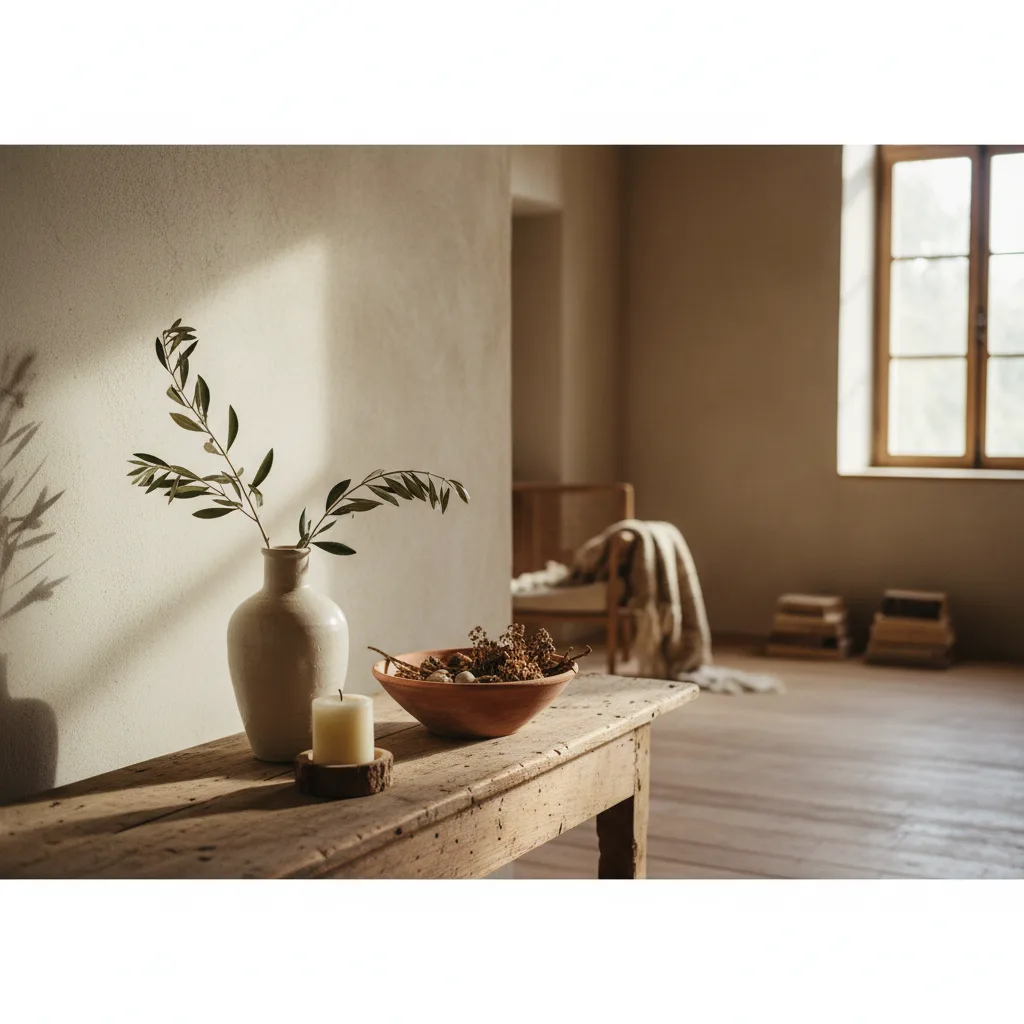
What the rule of 3 is and why it works in table décor
The rule of 3 is a principle of visual design: compositions made up of three elements come across as more appealing, natural and balanced than those of two or four. It's not an invention of the décor world — it comes from photography, classical painting and, ultimately, from how the human brain processes patterns.
When you place two objects on a table, the eye compares them. It looks for symmetry and, if it doesn't find it, perceives imbalance. When you place four, the gaze scatters and loses its focal point. With three, a subtle tension is created that compels the eye to travel across the whole composition, generating visual movement without clutter. The brain detects an implied center and feels comfortable — there's rhythm, but no monotony.
In practice, this means your centerpiece works better with three well-chosen pieces than with five placed at random. Fewer decisions, more impact. And that's exactly the philosophy behind authentic Italian design: it's not about filling space, but about selecting with discernment.
The three variables: proportion, height and function
Applying the rule of 3 isn't simply putting three things on the table. The difference between a composition that looks considered and one that looks improvised lies in how you play with these three variables.
Proportion: the relative size of each piece
Proportion refers to how the sizes of the three elements relate to one another and to the table that holds them. The most common mistake is using three pieces of similar size — the result is flat, with no visual hierarchy.
What works is a decreasing scale: a leading piece (the largest or most voluminous), a supporting piece (intermediate size) and an accent piece (the smallest). That difference in scale is what creates depth, even in a compact composition.
A useful benchmark: the largest element shouldn't exceed a third of your table's width. If your dining table is 90 cm wide, your main piece can be around 25-30 cm in diameter or length. The rest, proportionally smaller. That way the composition decorates without invading the space you need to eat, serve and rest your elbows.
Height: the trick of the invisible triangle
Varying the heights is probably the factor that transforms a composition the most. Three objects at the same height create a horizontal line that the eye ignores out of boredom. Three objects at different heights create an invisible triangle — and the triangle is the most stable and dynamic shape in visual composition.
The classic formula is simple: one tall element, one medium and one low. For example:
- Tall (25-35 cm): a slender vase with branches, some tall flowers or a sculptural piece.
- Medium (15-20 cm): a decorative bowl, a glass cloche, a low candleholder.
- Low (5-10 cm): a thick candle on a plate, a cluster of stones, a small bowl of fruit.
decorative Italian ceramic bowl
When you look at your composition from the front, you should be able to mentally trace a triangle between the three highest points. If the triangle is visible, the composition works. If the three points are in a straight line, you need to adjust.
There's an important practical consideration that many guides leave out: on a dining table, the maximum height of the centerpiece should allow diners to see each other. The reference is about 35 cm as an absolute maximum if you use the table for dinner. Above that, the centerpiece goes from decorating to getting in the way.
Function: give every piece a role
The third variable is the least aesthetic and the most clever. Each element of your trio should serve a function — even a subtle one. We're not talking only about practical functionality (storing something, providing light), but also about visual and sensory function.
One way to think about it is to assign roles: one element brings shape (volume, silhouette, structure), another brings texture (warmth, tactile contrast) and the third brings life (something organic, something that changes — fresh flowers, a lit candle, seasonal fruit). That combination of shape, texture and life is what turns three loose objects into a composition with character.
How to choose the three elements: combinations that work
The theory is all well and good, but what you need are concrete combinations. Here are several that respect the rule of proportion, height and function, and that you can adapt with what you already have at home — or with new pieces that are genuinely worthwhile.
| Combination | Tall element | Medium element | Low element | Style |
|---|---|---|---|---|
| Classic Mediterranean | Ceramic vase with olive branch | Bowl of lemons | Candle on a terracotta plate | Warm, Italian |
| Warm minimalist | Plain white vase with a single flower | Hardcover art book | Low cylindrical candle | Refined, Nordic-Mediterranean |
| Rustic with soul | Glass bottle with wildflowers | Wooden bowl with dried fruit and nuts | Small cutting board as a base | Natural, country house |
| Effortless elegance | Tall ceramic candleholder | Decorative center-bowl | Cluster of three votive candles | Sophisticated, special dinner |
| Seasonal (autumn) | Vase with dried branches | Tray with small pumpkins | Scented candle in a container | Cozy, seasonal |
What matters isn't copying an exact combination, but understanding the logic: tall + medium + low, shape + texture + life, lead + support + accent. With those three axes you can improvise with confidence.
Mistakes that ruin the composition (and how to avoid them)
Knowing the rule is the first step. Avoiding the common pitfalls is what separates a decent centerpiece from one that really works.
Everything in the same material. Three pieces of white ceramic at the same height is a set, not a composition. Mix materials: ceramic with glass, wood with metal, linen with stone. The contrast between textures is what gives visual richness.
Pieces too small for the table. If your table is generous (more than 180 cm long), three tiny elements will get lost in the center. Proportion works in both directions: not only between the pieces, but between the pieces and the surface they occupy. A large table calls for a composition with more presence — not more pieces, but pieces on a larger scale.
Ignoring negative space. The air between the three elements is as important as the elements themselves. If you bring them too close together, they look like a pile. If you spread them too far apart, they look like three loose objects. The ideal distance is usually between 5 and 15 cm between pieces, depending on the size of the table. They should read as a group, not as individuals.
Forgetting that the table gets used. A beautiful centerpiece that has to be removed every time you eat isn't a centerpiece — it's a decorative obstacle. Choosing a centerpiece well means thinking about daily living: can you pass a serving dish over it? Does a bread plate fit beside it? If the answer is no, the composition is too ambitious.
functional and decorative table centerpiece
Adapting the rule to your type of table
Not every table calls for the same composition. The shape of the surface determines where you place the three elements and how they relate to each space of each diner.
Long rectangular table (6-8 diners). You have two options: a single central composition with well-scaled pieces, or two three-element compositions placed in each third of the table. The second option works especially well at long dinners, because each zone has its own focal point.
Round table. The geometric center is the natural place for the composition. Here the rule of 3 works wonderfully because the triangle of heights is seen from every angle. Choose pieces that look good from any position — avoid objects with a "pretty face" and a flat back.
Small square table (2-4 diners). Less is more. A single compact composition with three contained-scale elements. On tables of 80-90 cm, the decorative centerpiece should take up no more than a quarter of the surface. If you overdo it, the plates won't fit.
If you're unsure which type of centerpiece suits your table, the guide to modern table centerpieces for 2026 gives you more concrete ideas by style and format.
The Italian touch: fewer pieces, more character
In the Italian tradition of the set table, the centerpiece doesn't compete with the food — it frames it. Italians don't fill the center of the table with ornaments; they choose few pieces, but ones with personality. A handcrafted ceramic bowl with fresh fruit, a low vase with flowers from the market, an unscented candle that won't interfere with the aromas of dinner.
That philosophy fits the rule of 3 perfectly. It's curation, not accumulation. And it's exactly what distinguishes a table with character from a table with "things on it." If you're looking for pieces that convey that Mediterranean authenticity without falling into cliché, it's worth exploring designer Italian ceramics — pieces meant to be used, not just looked at.
Quick checklist: set up your centerpiece in 5 minutes
Before you start, run through these points. If you tick them all, your composition will work:
- Three elements, no more, no less (to begin with).
- Different heights: tall, medium, low — invisible triangle.
- Scaled proportions: lead > support > accent.
- Different materials: at least two different textures in the trio.
- Negative space: 5-15 cm of separation between pieces.
- Functionality respected: the composition leaves room to eat.
- Maximum height < 35 cm: so diners can see each other.
- Something living or changing: flowers, fruit, a candle — an element that brings movement.
If you want to go deeper into what exactly to put in the center of your table, the guide what to use as a table centerpiece without clichés complements this rule perfectly with concrete ideas.
Complementary pieces to complete your Italian table composition with the rule of 3
Frequently asked questions about the rule of 3 in table centerpieces
Does the rule of 3 only work with exactly three objects? The basic principle is indeed based on three individual pieces, but you can group elements so they count as one. For example, a cluster of three votive candles can work as a single "low" element in your composition. What matters is that, visually, three distinct masses read at three different heights.
Can I use the rule of 3 on a living room coffee table? Yes, and in fact it's one of its most common applications. On coffee tables (the low ones in the living room), the rule works the same way: three elements at staggered heights. The difference is that here the composition is seen from above, so pay more attention to how it looks from a top-down view, not just from the front.
What maximum height should my dining table centerpiece have? For a dining table where you'll be having dinner with guests, the reference is 35 cm maximum. Above that, the tall piece starts to block eye contact between diners. If your table is purely decorative (a sideboard, an entryway console), there's no limit — you can play with greater heights.
Does the rule of 3 work on small tables? It works, but with an adapted scale. On tables of 80 cm or less, use proportionally smaller pieces and reduce the spacing between them. The composition should take up no more than a quarter of the visible surface of the table.
Can I mix styles across the three elements? Yes, as long as there's a common thread. That thread can be color (three pieces in earth tones), material (ceramic and natural materials) or intention (three Mediterranean pieces). The rule works best when the elements differ from each other but belong to the same aesthetic family.
Related articles you might find interesting:
- How to choose the perfect centerpiece for your dining room — the complete guide to getting the main piece right.
- 10 modern table centerpiece ideas for 2026 — visual inspiration with current trends.
- What to use as a table centerpiece: the cliché-free guide — concrete ideas beyond the usual flowers.
- How to set an authentic Italian table (without clichés) — bring the Italian philosophy to the whole table, not just the center.
- Ceramic table centerpieces: why they last and how to care for them — if you go for ceramic, this is for you.