Ceramic table centrepieces: why they last (and how to care for them)
A well-chosen ceramic table centrepiece can stay with you for decades. That is no exaggeration nor a sales pitch: it is the very nature of the material. While plastic pieces yellow, metal ones rust and fine glass accumulates micro-scratches with use, ceramic ages with dignity. It stays stable, keeps its colour and, if you treat it with a minimum of care, looks just as beautiful as it did on day one.
And yet, there are legitimate questions. Does it break easily? Is it hard to clean? Is it worth paying more than for a resin or glass piece? In this article you will find real answers — no workshop jargon, no empty promises — to help you decide whether ceramic is the material that fits your table.
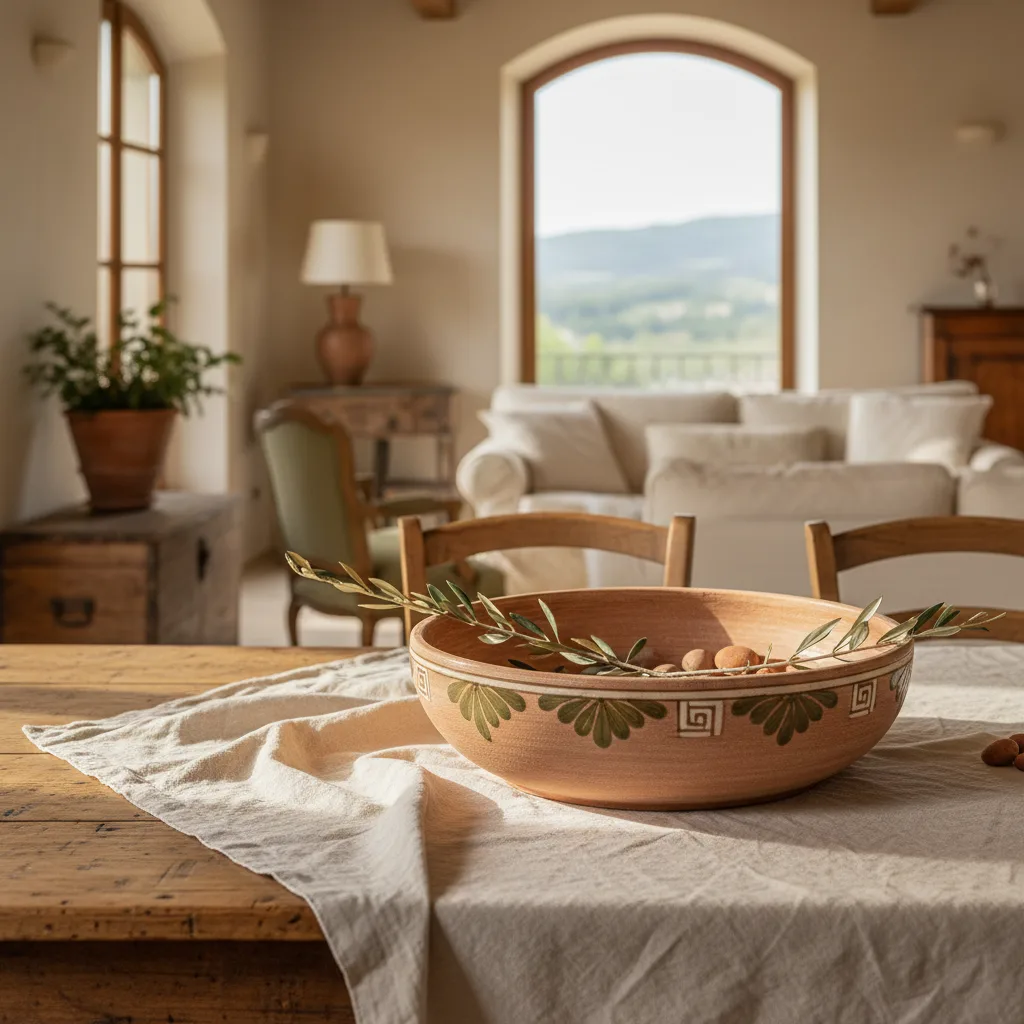
Why ceramic is the longest-lasting material for a centrepiece
Ceramic has been the go-to material for household objects that need to withstand the passage of time for centuries. It is no coincidence that archaeological museums are full of intact ceramic pieces from thousands of years ago, while the textiles, woods and metals of the same era disappeared centuries ago.
Applied to your dining room, this translates into very concrete advantages. A ceramic table centrepiece resists surface scratches, does not absorb odours (if it is properly glazed), does not warp with the temperature changes common in a home and keeps its colour without fading from light exposure. If you compare it to a resin centrepiece, which after two or three years starts to lose its shine and yellow, the difference is obvious.
There is an important nuance: not all ceramic is the same. Low-fired ceramic is more fragile and porous. High-fired ceramic — such as stoneware or porcelain — is denser, less absorbent and far more resistant to accidental knocks. When we talk about Italian centrepieces from manufacturers with a track record, like Brandani, the firing and glazing tend to be looked after in detail, which shows in the piece's ultimate durability.
Ceramic versus other materials: an honest comparison
Before you decide, it is worth looking at the pros and cons of each material in a real-world context — not on the product page, but in everyday use. This table sums up what matters when you choose a centrepiece that is going to sit on your dining table every day.
| Feature | Ceramic / stoneware | Crystal / glass | Metal | Resin / plastic |
|---|---|---|---|---|
| Durability | Very high (decades) | High, but sensitive to knocks | High, but can rust | Medium (2-5 years) |
| Scratch resistance | High | Medium-low | High | Low |
| Maintenance | Minimal: damp cloth | Must be dried to avoid marks | Depending on the finish, may need polishing | Minimal, but degrades anyway |
| Colour retention | Excellent | Excellent | Variable (patinas) | Poor (yellows) |
| Weight | Medium-high | Variable | High | Light |
| Tactile feel | Warm, artisanal | Cold, elegant | Cold | Artificial |
| Average price | €25–€90 | €20–€80 | €30–€100 | €10–€30 |
Ceramic does not win in every category — glass has a sparkle that matte ceramic doesn't replicate, and metal can add an interesting contrast in certain styles. But if you are after the best balance between durability, low maintenance and aesthetic warmth, ceramic is hard to beat. It is the material that ages best without you having to do anything special.
If you want to dig deeper into the comparison between ceramic and glass for decorative pieces, the article on ceramic or glass vases goes into detail about when each option makes sense.
How to clean a ceramic table centrepiece (without overcomplicating it)
This is where ceramic wins hands down over other materials: maintenance is almost non-existent. You don't need special products, elaborate routines or to take the piece anywhere. Three basic guidelines are enough.
Routine cleaning
For day-to-day care, a soft cloth lightly dampened with lukewarm water is all you need. If there is some grease or built-up dirt — for example, if the centrepiece is in the kitchen near the hob — add a drop of mild soap. Nothing more. Dry with a clean cloth or let it air-dry.
Avoid metal scouring pads and products with concentrated bleach or ammonia. Not because they will destroy the piece, but because they can progressively damage the glaze and dull the surface's shine. It is like using fine sandpaper on a good wooden piece of furniture: you don't break it, but you wear it down needlessly.
Specific stains
If a persistent stain appears — wine, coffee, tomato sauce — make a soft paste of baking soda with a few drops of water. Apply it with a cloth, let it sit for five minutes and rinse off with lukewarm water. On glazed pieces, this works in 90% of cases without leaving a trace.
What you should never do
There are three mistakes that shorten the life of any ceramic piece and that come up more often than you'd think. Leaving the piece submerged in water for hours weakens the unglazed areas and encourages internal staining. Exposing it to sudden temperature changes — from the oven to the cold worktop, or from a hot dishwasher cycle into the open air — can create micro-cracks. And stacking several damp pieces without anything between them causes rubbing that marks the surface.
Types of ceramic you'll find in table centrepieces
Not all ceramics are the same, and knowing this saves you surprises. These are the three main types you'll find on the market for decorative table centrepieces.
Earthenware or low-fired ceramic
It is the most affordable and also the most fragile. It is fired at relatively low temperatures (between 900 °C and 1,100 °C), which makes it porous if it is not well glazed. It is common in artisanal market pieces and in seasonal décor. It does the job, but it is not the option if you want something that lasts for many years.
Stoneware
Fired at higher temperatures (1,200 °C–1,300 °C), stoneware is dense, resistant and practically waterproof even when unglazed. It is the preferred material in contemporary Italian ceramic for tableware and décor. It has a warm texture and a pleasant feel, and it withstands daily use without flinching. Most Brandani centrepieces are made from stoneware or high-fired ceramic combinations.
Porcelain
The finest and the most resistant of the three. It is fired above 1,300 °C and the result is a translucent, elegant and extremely durable piece. It is more common in tableware than in centrepieces — its aesthetic tends towards the formal — but there are decorative porcelain pieces that work very well on classic tables or in dining rooms with plenty of natural light.
Italian stoneware table centrepiece
If you are weighing up which type of piece fits best according to the shape of your table, the article on a centrepiece for a round or rectangular table gives you very practical guidance.
Ceramic centrepiece styles that work in 2026
Ceramic does not necessarily mean "classic" or "rustic". In 2026, trends in table décor have taken ceramic into territory that ten years ago would have seemed unlikely.
The matte finish in neutral tones — sand, soft terracotta, stone grey, off-white — dominates today's interior design proposals. These are pieces that don't compete with the food or the rest of the table, but rather add texture and warmth without shouting. They work equally well on a solid wood table or over a linen tablecloth in light tones.
Organic shapes are also on the rise: irregular edges, surfaces with subtle relief, controlled asymmetries reminiscent of handmade pieces. It is no coincidence that contemporary Italian design is betting heavily on this line — it combines Mediterranean artisanal tradition with a very current aesthetic. If you want to explore more style options, the article on modern table centrepiece ideas for 2026 gathers ten specific proposals.
At the other extreme, ceramic centrepieces with a glossy finish and saturated colours — cobalt blue, emerald green, rust red — are coming back as a counterpoint to the dominant minimalism. These are pieces with character, ideal if the rest of your table is understated and you need a focal point with personality.
How long a ceramic table centrepiece should last (and signs that something is wrong)
With minimal care, a quality ceramic table centrepiece should easily last more than twenty years without losing its appearance. If the piece is stoneware or porcelain and is well glazed, there is no reason for its lifespan to be any shorter.
That said, there are signs that a ceramic piece is not of the quality it should be. If the glaze starts to crack in the first few months — small cobweb-like lines on the surface — the firing was probably insufficient. If the base absorbs water and leaves moisture marks on the table, the piece is not properly vitrified. And if the colour fades after just a few cleanings, the glaze is of poor quality.
This does not happen with manufacturers who control their production process from start to finish. It is one of the advantages of choosing pieces from brands with decades of experience in ceramic, where the quality of the glazing and firing is not left to chance. If you want to understand better what lies behind a brand like Brandani and why its pieces maintain their standard, the article on the history of Brandani: 75 years of the Italian table tells the story in detail.
Checklist: how to care for your ceramic table centrepiece
If you want a quick summary you can refer to at any time, here are the essentials:
- Daily cleaning: soft cloth + lukewarm water. If there is grease, a drop of mild soap.
- Tough stains: baking soda paste + water, five minutes, rinse.
- Drying: air-dry or with a clean cloth. Never with direct heat (hairdryer, radiator).
- Storage: if you store several pieces, separate them with a cloth or soft paper.
- Always avoid: metal scouring pads, concentrated bleach, sudden temperature changes.
- Placement: a stable surface, away from edges and busy areas.
- Sun exposure: prolonged direct light can alter some glazes over time.
Complementary Italian ceramic pieces to complete the table
Frequently asked questions about ceramic table centrepieces
Can you put a ceramic table centrepiece in the dishwasher? It depends on the piece. Glazed stoneware and porcelain are usually dishwasher safe, but pieces with hand-painted decorations or special finishes can deteriorate with intensive cycles. Always check the manufacturer's instructions. When in doubt, hand washing with lukewarm water is the safest option.
Does ceramic break easily? Less than you might think. High-fired ceramic (stoneware, porcelain) is very resistant to the knocks of everyday use. What can damage it are falls from a height onto hard surfaces. It is a rigid material — it doesn't flex like plastic — so a strong impact can crack it, but under normal household conditions it is very reliable.
What is the difference between ceramic and stoneware in a centrepiece? Stoneware is a type of ceramic. The difference lies in the firing temperature: stoneware is fired between 1,200 °C and 1,300 °C, which makes it denser, more waterproof and more resistant than low-fired ceramic (earthenware). For decorative table centrepieces, stoneware is the option with the best balance between strength and aesthetics.
How can you stop a ceramic centrepiece from scratching the table? Place a self-adhesive felt protector on the base of the piece. It is cheap, invisible and prevents any marks on the wood or glass of the table. Many manufacturers already include a base with a soft finish, but if your piece doesn't have one, felt is the simplest solution.
Is it worth spending more on an Italian ceramic table centrepiece? Yes, if you value a piece that lasts and keeps its appearance over time. Italian ceramic from established manufacturers — with decades of control over the firing and glazing process — offers a quality of finish you can feel to the touch and that holds up year after year. It's not that ceramic from other origins is bad, but the consistency of the process makes the difference in the long run.
Related articles: