Ceramic or glass vases: which to choose for your space
You're standing in front of a shelf with ceramic vases on one side and glass vases on the other. You like them both, but you know that only one will work in that corner of the living room you've been wanting to sort out for weeks. The problem isn't taste — it's not being sure which material best suits your light, your style and the real use you'll give it.
This guide isn't about telling you which is "better" (there is no such thing). It's about giving you the criteria to choose with confidence, without regretting where you put it the next day.
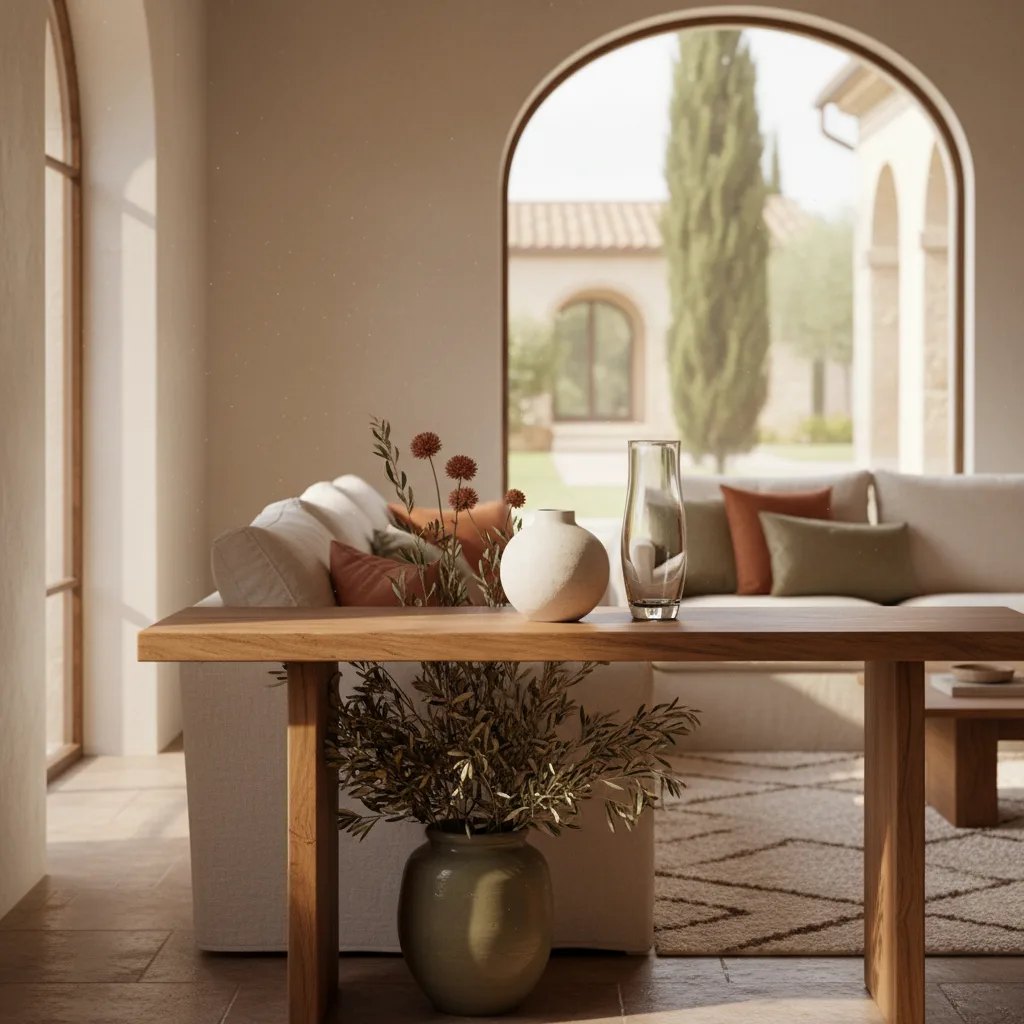
Ceramic and glass: two materials, two personalities
Before talking about spaces or styles, it helps to understand what each material brings to a room. It's not just about aesthetics — texture, visual weight and the way each relates to light completely change the atmosphere of a corner.
Ceramic is an opaque, tactile material that absorbs light rather than reflecting it. A white ceramic vase with a matte finish doesn't compete with what's around it: it complements it. It brings warmth, weight and a presence that feels handcrafted even when industrially produced. It's the material that asks to be touched.
Glass, on the other hand, plays with transparency. It lets light through, reflects the colours of its surroundings and creates a sense of lightness that ceramic will never give you. A glass vase in a window with morning sun isn't an object: it's almost a lamp. But that same transparency can be a problem if what you're after is sculptural presence or a solid focal point.
Neither is superior. They are different tools for different decorating problems.
Quick comparison: ceramic versus glass
When the decision gets tricky, it helps to see the differences side by side. This table sums up the criteria that weigh most when choosing between one material and the other.
| Criterion | Ceramic | Glass |
|---|---|---|
| Visual weight | High — fills the space, anchors the composition | Low — lightens, lets it breathe |
| Relationship with light | Absorbs — ideal for creating contrast | Reflects and refracts — multiplies brightness |
| Texture | Rough, matte, satin, glazed… a wide tactile range | Smooth, polished, occasionally cut |
| Durability | High — withstands light knocks and temperature changes | Medium — more fragile against impacts |
| With fresh flowers | Works, but you can't see the stems or the water | Ideal — the stems become part of the decoration |
| Without flowers (just the piece) | Excellent — the piece stands on its own as an object | Depends on the shape — can look empty if it's plain and clear |
| Maintenance | Low — a dry or damp cloth is enough | Medium — water marks and fingerprints are visible |
| Range of styles | Rustic, Mediterranean, boho, wabi-sabi, modern matte | Modern, classic, Nordic, art deco |
| Approximate price | €15–€90 depending on size and finish | €10–€80 depending on thickness and design |
The key is in the "visual weight" column. If your space needs an anchor, ceramic. If it needs air, glass.
Which material works best for each space
Not every corner of your home asks for the same thing. A narrow, dark hallway doesn't need the same as a living room with a south-facing window. Here are the combinations that work best, based on how each material interacts with the real conditions of each room.
Living room with good natural light
If your living room gets direct light for several hours a day, glass can become an almost magical element. Light passes through the material, creates reflections and brings a luminous presence without adding visual mass. It's the obvious choice for an authentic Italian table setting where you want attention to flow without obstacles.
But be careful: if you already have many transparent elements (a glass table, open shelving, mirrors), adding another translucent object can make the space feel empty instead of light. In that case, a ceramic vase with a marked colour or texture breaks the monotony and gives a point of anchoring.
Living room with little light or dark tones
Here ceramic gains ground. A ceramic vase in a cream or off-white tone reflects the little available light better than clear glass, which simply disappears in dark settings. Ceramics in light tones — white, sand, soft terracotta — act as small focal points without needing extra lighting.
Entryway or hall
The entryway is a passage space where you need quick visual impact. A large ceramic vase on a narrow console works as a sculptural piece that defines the character of the home from the very first second. Glass here usually goes unnoticed, unless it's a coloured or thickly cut piece with a personality of its own.
Bedroom and bedside table
In intimate, compact spaces, less is more. A small glass vase with a single flower or a fine branch brings delicacy without stealing visual space from the lamp or the books. Ceramic works if you choose compact pieces with soft shapes — nothing angular or too heavy for a bedside table that already shares space with the alarm clock and the glass of water.
Kitchen and dining area
The kitchen calls for materials that keep up with the daily pace. Ceramic withstands splashes, temperature changes and accidental knocks better. A low ceramic bowl or vase on the worktop, with fresh herbs or lemons, is a Mediterranean classic that never fails. If you want to go deeper into how to use pieces like these, the guide on what to use as a centrepiece will give you concrete ideas.
How to choose according to your decorating style
The material of the vase should reinforce the style you already have at home, not contradict it. This seems obvious, but it's the most common mistake: buying a beautiful vase in the shop that then doesn't match anything once you get it home.
For Mediterranean, rustic or wabi-sabi styles, ceramic is the natural choice. Matte finishes, organic shapes and the material's subtle imperfections connect with the philosophy of these styles: naturalness, warmth, honest materials. Stoneware, terracotta and ceramics glazed in earthy tones are safe bets.
For modern, Nordic or minimalist settings, glass brings the lightness and visual cleanliness these styles demand. Simple cylindrical shapes, clear or slightly tinted glass, without adornment. If you prefer ceramic in a minimalist setting, look for monochrome pieces — a white ceramic vase is probably the most versatile piece there is.
For eclectic or bohemian spaces, mixing both materials is precisely what works. The rule here is to keep a common thread: the same colour range, the same family of shapes or the same level of "finish" (all handcrafted or all polished, not half and half).
The composition rule few people apply
Buying a beautiful vase is easy. Placing it well is where most people fail. There's a principle that interior designers apply almost always and that completely changes the result: the rule of odd numbers.
Group vases in odd numbers — three is the magic number. Choose pieces of different heights that share something: the material, the colour palette or the family of shapes. Three ceramic vases in tones from white to terracotta, with staggered heights, create a composition the eye travels naturally. Three identical vases, on the other hand, feel like a shop window display.
This same logic applies if you mix materials: a tall dark ceramic vase, a medium clear glass one and a small light ceramic one can work if the overall palette is coherent. The trick is that the differences in material shouldn't be louder than the similarities in colour or proportion.
If you're interested in going deeper into proportions and heights, the guide on the rule of 3 for centrepieces applies exactly the same principles.
Italian ceramic: why origin matters
Not all ceramic is the same. A mass-produced industrial ceramic vase and an Italian ceramic vase with an artisan tradition behind it share the material, but not the character. The difference lies in the finishes, the glazes, the proportions and that attention to detail that has set Italian design apart for decades.
Italy has a ceramic tradition that runs from Tuscan terracotta to the majolica of Deruta, by way of the contemporary stoneware of makers like Brandani, who have spent more than 75 years working ceramic with a design sensibility. When you choose an authentic piece of Italian ceramic — not an imitation with a generic label — you're choosing a material that has passed through hands that understand proportions, colours and finishes.
At Vita Italian Living we work as an online store specialising in Brandani. That means a complete catalogue, not the four pieces you find on a marketplace. If you want to better understand what "real Made in Italy" means, the article on real vs fake Made in Italy explains it in detail.
Basic care by material
Choosing well is only half the work. Keeping the piece in good condition is the other half. Here are the essential care tips for each material, with no fuss.
Ceramic: a dry or slightly damp cloth for dust. If the piece is glazed, you can use lukewarm water with a mild soap. Avoid sudden temperature changes (don't put it in the dishwasher unless indicated). Unglazed ceramics can absorb moisture: if you use fresh flowers with water, place an inner glass or plastic container to protect the material.
Glass: lukewarm water with a splash of white vinegar removes water marks and restores transparency. Always dry with a microfibre cloth to avoid those annoying drip marks. Cut glass collects dust in the grooves: a soft toothbrush solves it. And the most practical tip: if you live with children or pets, keep glass vases out of high-traffic areas.
When to mix ceramic and glass (and when not to)
Mixing materials is one of the strongest trends in decoration, but it requires a minimum of intention. It's not about putting one vase of each side by side and hoping it works.
It works well when the materials occupy different planes: ceramic at floor or low-furniture level, glass at eye level or on high shelves where light can pass through it. It also works in staggered compositions on a console, alternating visual weights: heavy-light-heavy.
It doesn't work when both materials compete for attention on the same plane and without colour cohesion. If your console has a rustic orange ceramic vase next to a cut art deco glass vase, the result isn't eclectic — it's chaotic.
The key is always the same: a common element. Colour, proportion or stylistic intent. If that thread exists, the mix works. If not, you're better off sticking to a single material and varying the shapes.
To see how to apply these principles to a whole living room, the article on how to combine decorative vases in a modern living room goes into much more detail.
Quick checklist: ceramic or glass for your space?
Before buying, ask yourself these questions. If you answer "yes" to more than half in one column, that's your material.
Choose ceramic if:
- Your space has little natural light
- You're looking for a piece that works on its own, without flowers
- Your style is Mediterranean, rustic or wabi-sabi
- You want something tactile, with texture
- There are children, pets or high-traffic areas
- You prefer minimal maintenance
Choose glass if:
- You have good natural light that can pass through the piece
- You want to show off fresh flowers with visible stems
- Your style is modern, Nordic or minimalist
- You need to visually lighten a cluttered space
- The piece will be in a safe spot, with no risk of knocks
Complementary Italian ceramic pieces that complete the table and living room decoration alongside the vases
Frequently asked questions
Are ceramic vases more durable than glass ones? Generally, yes. Ceramic withstands minor knocks and temperature changes better. Glass is more fragile against impacts, although thick or tempered glass can be quite resistant. For high-traffic areas or homes with children, ceramic is the more practical option.
Can I use a ceramic vase with fresh flowers and water? Yes, but with care. If the ceramic is not glazed on the inside, it can absorb moisture and stain over time. The trick is to use an inner container of glass or plastic to hold the water and protect the ceramic.
Which vase looks better empty, without flowers? Ceramic works much better as a standalone sculptural piece. Its texture, colour and shape sustain it as a decorative object in its own right. A plain, clear glass vase, left empty, tends to look as if something is missing — unless it has an intense colour, interesting cut detailing or a very sculptural shape.
Can you mix ceramic and glass in the same composition? Yes, and it can look great if you share a unifying element: the colour palette, the range of sizes or the stylistic intent. The rule is that the differences in material should not be louder than the similarities of the whole.
What is the difference between crystal and glass in decorative vases? Crystal contains lead oxide, which gives it more sparkle, weight and the ability to refract light. Standard glass is lighter and cheaper, but it lacks that "sparkling" effect that characterises crystal. For decorative use, both work well; crystal stands out more in pieces where light plays a leading role.