Why a White Ceramic Vase Works in Any Home
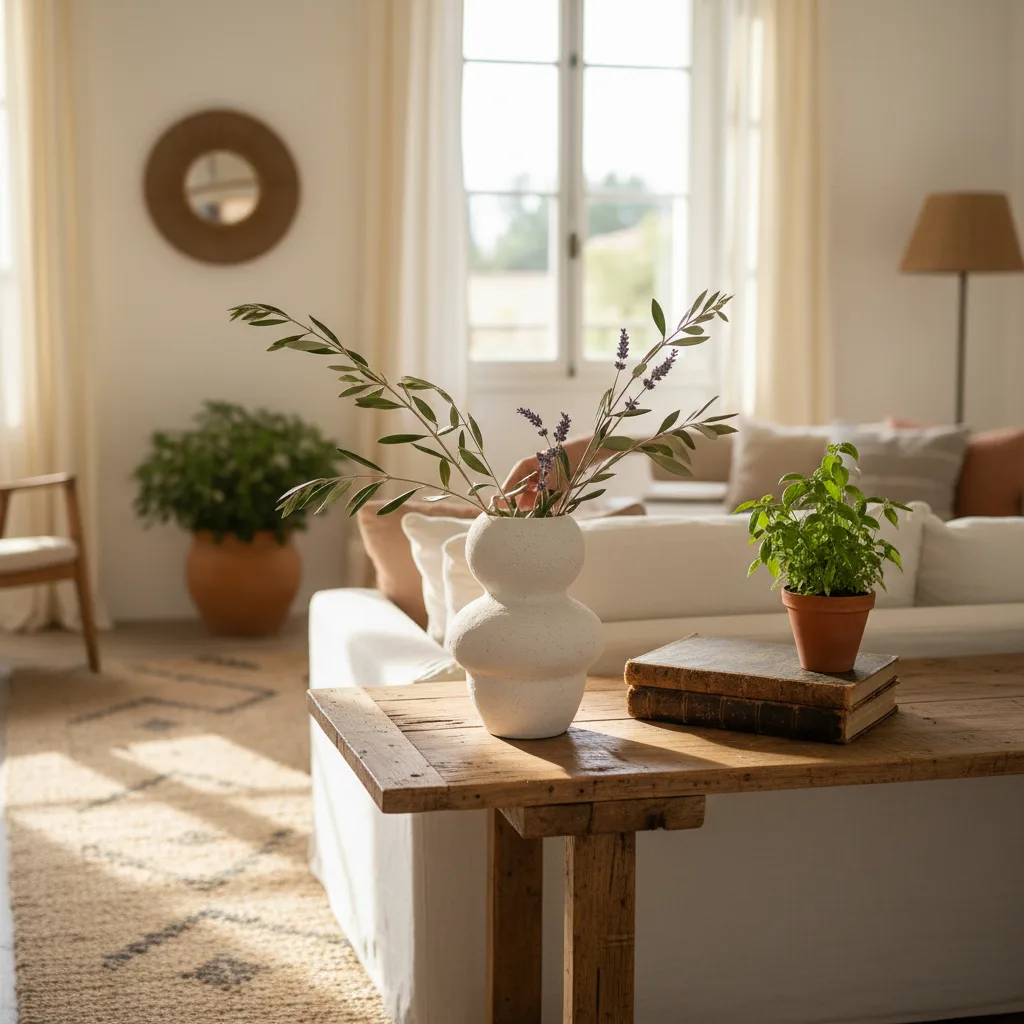
A white ceramic vase seems like an obvious piece. Too simple, perhaps. And yet there's a reason it appears again and again in the best-decorated homes, in the interior-design feeds you like most and in the windows of the most discerning shops: it works. Not because it's spectacular, but because it's never one too many, never clashes and always adds something that's hard to put into words —light, calm, visual balance— but that you notice instantly when it's missing.
This article isn't about convincing you to buy one. It's about understanding why this seemingly simple piece has a decorative power that few others can match. And about making sure that, if you decide to bring one in, you know how to get the most out of it.
White in ceramic isn't a colour: it's a canvas
When someone says "white", we think of a single thing. But in ceramic, white has nuances that completely change the way a piece is perceived. A matte white absorbs light and adds texture; a glossy white reflects it and visually expands the space. A warm white with cream veining connects with the artisanal; a pure, smooth white conveys modernity.
That variety within a single colour is what turns the white vase into a decorative chameleon. It doesn't compete with its surroundings: it complements them. If your living room has earthy tones and natural wood, a matte white ceramic vase introduces a point of light without breaking the warmth. If your aesthetic is more Scandinavian, with greys and straight lines, the same vase adds organic softness.
Ceramic also has a quality that glass or plastic can't reach: visual weight. A ceramic vase occupies space with presence, without needing to be huge. It reads as something made, not manufactured. And that difference, however subtle, changes how a room feels.
Five decorative styles, one vase
The real proof that a white ceramic vase works in any home is that it fits into styles that, on paper, have nothing in common. Let's see how it behaves in each one.
Mediterranean style
Here the white vase is right at home —literally. Alongside natural fibres, untreated wood and linen textiles, it provides the luminous counterpoint that balances the earthy tones. A decorative Italian ceramic vase in this context needs nothing more: no flowers, no extras. The piece speaks for itself.
Scandinavian style
Scandinavian minimalism calls for clean shapes and neutral colours. A matte white vase with a rounded silhouette introduces an organic note that keeps the space from feeling cold. The trick is to choose pieces with texture —subtle ridges, rough finishes— that add tactile interest without breaking the palette.
Boho or eclectic style
In a setting full of colour, patterns and varied materials, white acts as a visual breather. A large white vase, placed on a side table next to colourful cushions and hanging plants, creates the point of calm the eye needs to avoid feeling overwhelmed.
Contemporary style
Geometric lines, polished finishes, a pared-back palette. Here a white ceramic vase with a sculptural shape becomes a work of art. Italian designers have spent decades exploring this idea: that a functional object can also be a contemplative one.
Renovated rustic style
In country houses or restored flats with exposed beams and terracotta floors, the white vase brings freshness without ever feeling out of place. The key is that it be real ceramic —with the small imperfections inherent to the material— and not an industrial imitation.
Proportion and placement: what makes the difference
Having a beautiful vase guarantees nothing if you place it where it shouldn't go or choose a size that's out of proportion with the space. These are the principles interior designers apply and rarely explain.
| Surface | Recommended vase height | Tip |
|---|---|---|
| Coffee table | 15–25 cm | Don't block the visual conversation between seated people |
| Entryway console | 25–40 cm | It can be the standout piece; pair it with a small object to one side |
| Shelf | 15–30 cm | Use it to break the horizontal line of the books |
| Dining table | 20–30 cm | Never taller than the eye line of seated guests |
| Floor (corner or beside furniture) | 40–60 cm | Large vases only; small ones on the floor look like a mistake |
The most useful rule is simple: the vase should take up between a third and two-thirds of the height of the piece of furniture it sits on. A 20 cm vase on an 85 cm console works. The same vase on a 40 cm table looks out of proportion. If you'd like to dig deeper into these proportions, the guide to large vases for the entryway covers this topic in more detail.
large white ceramic vase for the entryway
With flowers, without flowers or with branches: three different lives
One of the great advantages of a white vase is that it doesn't depend on what you put inside to justify its presence. But its character does change radically depending on its contents.
Empty. This is the most underrated option. An empty white vase works as a sculptural piece: it introduces volume, texture and shape onto a surface without adding chromatic complexity. Interior designers use it constantly to "anchor" arrangements on shelves and consoles. If the vase's shape has personality —pronounced curves, an asymmetric mouth, a textured finish— leaving it empty is a statement of intent.
With fresh flowers. The contrast between the white and the vivid colours of the flowers creates an effect that never fails. Single-colour tulips, olive branches, white peonies or roses in powdery tones: the white vase acts as a neutral frame that enhances what it holds without competing with it. It's the same principle behind why museums have white walls.
With dried branches or grasses. This is the trend that has grown most in recent years, and with good reason. Cotton stems, pampas grass, dried eucalyptus or even leafless tree branches create arrangements that last for months, require no maintenance and add an elegant verticality. If the idea of decorative vases without flowers appeals to you, this avenue is well worth exploring.
Matte ceramic vs. glossy ceramic: which to choose
Not all white ceramic vases convey the same thing, and the finish is the factor that most influences the final impression.
The matte finish is the most versatile. It absorbs light rather than reflecting it, giving it a more natural, more artisanal look. It pairs especially well with warm materials —wood, linen, rattan— and in rooms with plenty of natural light, where a glossy finish could create awkward reflections. It's the safe choice if you want something that works in any context.
The glossy or glazed finish has a more formal, more classic air. It reflects light and creates small highlights that can liven up a visually flat surface. It's ideal for spaces with little natural light, where that reflection helps expand the perception of the space. It also works well in contemporary or art deco settings, where shine is a deliberate aesthetic device.
If you're not sure which to choose, the comparison between ceramic and glass vases can help you define which material and finish fit best in your space.
The mistakes that ruin a good white vase
Having the right piece isn't enough if you make any of these common mistakes. They're more frequent than they seem, and all of them have an easy fix.
Placing it in a dark corner. White needs light to exist. A white vase in a corner with no lighting loses all its appeal and looks like a forgotten object. If there's no natural light, a nearby table lamp solves the problem.
Choosing a size that doesn't match the space. A vase that's too small on a large piece of furniture goes unnoticed. One that's too big in a small space feels overwhelming. Go back to the proportion table above and apply the rule of thirds.
Combining it with too many identical whites. If everything in the arrangement is plain white —vase, tray, candles, frame— the whole loses depth. Mix shades of white (off-white, ivory, snow) and add at least one different material. A wooden or colourful ceramic decorative tray breaks the monotony without complicating the palette.
Not cleaning it. It seems obvious, but dust shows far more on matte white ceramic than on any other colour. A damp cloth with mild detergent every couple of weeks keeps the piece looking like new. Avoid abrasive scourers that could damage the finish, especially on handcrafted pieces. For more maintenance tips, the article on ceramic centrepieces and their care applies in exactly the same way to vases.
Why Italian ceramic makes the difference
You can find white ceramic vases in any home décor shop. They're in big chains, in bazaars and in marketplaces. So what does an Italian ceramic one offer that any other doesn't?
Three specific things. The first is design with intent: pieces from established Italian makers —like Brandani, with more than 75 years of history— don't follow seasonal trends but design lines that have been refined over decades. That translates into shapes that never go out of fashion.
The second is the quality of the material. Italian ceramic has a tradition that goes back centuries, and you can tell in the thickness of the walls, in the uniformity of the glaze, in the weight of the piece in your hand. Ceramic fired at standard industrial temperatures is not the same as a piece that has gone through more demanding quality-control processes.
The third is the finishing detail. The small imperfections of a handcrafted Italian piece —a subtle variation in tone, a slightly irregular curve— are not flaws: they're proof that a human hand was involved in the process. And that is exactly what sets an object with character apart from a generic one. If you'd like to dig deeper into how to spot authentic ceramic, the article on real vs. fake Made in Italy is a good starting point.
How to integrate your white vase into an arrangement
A vase on its own on a surface can work, but if you want to create an arrangement with more depth, these combinations give the best results:
- White vase + small metallic object (a gold candle holder, a little brass tray): the matte/shine contrast creates interest without complicating the palette.
- White vase + a book or stack of books: the most classic editorial styling combination, and it works because the book adds colour and horizontality against the verticality of the vase.
- Two or three white vases of different sizes: grouped in a triangle, they create a balanced arrangement that works as a focal point. The rule of three for centrepieces explains this technique in detail.
- White vase + small potted plant: adds life and a touch of green without the need for fresh flowers.
The key is not to overload. Three well-chosen elements always beat six placed without judgement. And if you combine vases with other ceramic pieces, the article on how to combine decorative vases in a modern living room will give you more practical ideas.
Complementary pieces for creating arrangements alongside the white vase
Frequently asked questions
Does a white ceramic vase look good in a home with lots of colour? Yes, and in fact it's one of its best uses. In a setting with vibrant textiles, colourful artwork or bold furniture, white acts as a visual breather. The eye needs neutral zones to avoid feeling overwhelmed, and a white vase fulfils that role without looking dull.
What size of white vase should I buy if I don't know where to put it? One between 20 and 30 cm tall is the most versatile. It works on a dining table, on a shelf, on a console or on a side table. It's big enough to have presence and small enough not to dominate any space.
Is matte or glossy ceramic better for a first vase? Matte. It's easier to fit into any style, pairs well with more materials and doesn't create reflections that can feel awkward in certain lighting. A matte finish is the safe bet when you're not sure what fits best.
Can I use a ceramic vase for flowers with water? Yes, as long as the interior is glazed or treated to hold liquids. Many handcrafted ceramic pieces are designed for this. Change the water every two or three days and clean the interior between uses to avoid deposits.
Is it worth paying more for an Italian ceramic vase? It depends on what you're after. If you want a piece that lasts for years, with a refined finish and a shape full of character, then yes. The difference between industrial ceramic and a piece from a maker with tradition is something you feel in your hands and over time.