Decorative trays: 5 ways to use them you'd never thought of
A decorative tray seems like a simple object: you buy it, set it on the table and that's that. But if you treat it as a mere flat accessory you are wasting one of the most versatile pieces your home can have. The tray isn't just for serving coffee to guests; it's a tool for visual composition, a way to create order where there was once chaos, and an aesthetic anchor that can transform any surface without the need for a renovation.
What sets a generic tray apart from a piece with character is the material, the finish and the intention behind how it is placed. A handmade Italian ceramic doesn't work the same way as a plastic tray from the bargain shop. And the uses I'm about to share require exactly that: a piece worth looking at, not just using.
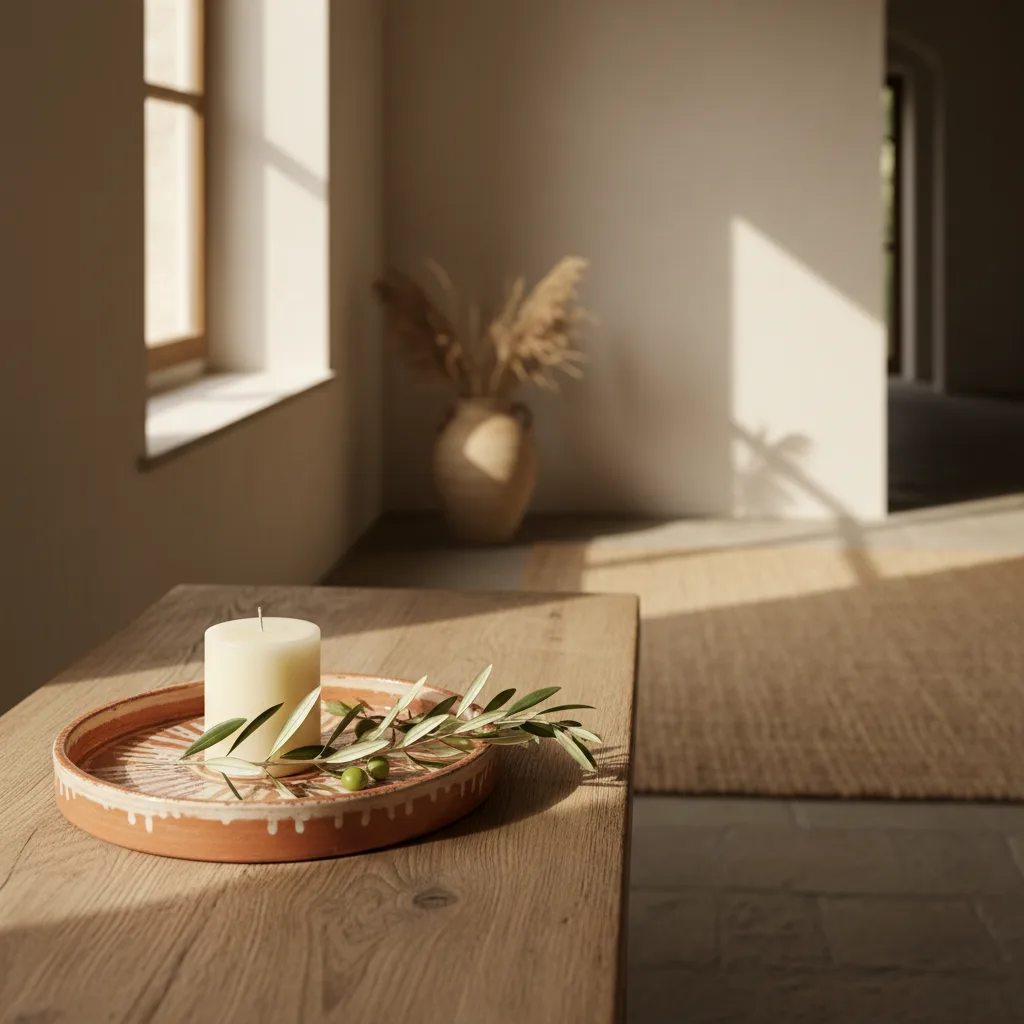
Creating an island of order on large surfaces
Wide coffee tables, bedroom dressers and living-room sideboards all share a common problem: they accumulate objects with no rhyme or reason. Keys, remotes, half-used candles, a book you left there two weeks ago. Everything gets scattered and the surface loses any decorative intention.
A decorative tray solves this instantly. By placing it on a large surface, you define a visual perimeter. Everything inside it looks intentional; everything outside it is clean space. It's the same principle interior stylists use when they photograph homes for magazines: grouping things to give them meaning.
The key lies in proportion. On a rectangular coffee table, a round tray works better—the contrast of shapes creates interesting visual tension. On a long dresser, a rectangular or oval tray keeps the line without competing. And the ideal contents follow the rule of three: three objects of different heights (for example, a candle, a small vase and a bowl) create a composition that the eye effortlessly perceives as balanced.
Turning the entryway into a memorable first impression
The entryway is probably the most neglected area in most homes. It becomes a functional dumping ground: keys, post, forgotten face masks, loose coins. And yet it's the first thing your guests see when they walk through the door.
Placing a decorative tray on the console or hallway furniture completely changes how the space is perceived. It's not about forbidding yourself from dropping your keys there—it's about giving the keys a beautiful place to live. A ceramic tray with an artisanal finish elevates the everyday. Inside you can put your keys, yes, but also a couple of dried branches or a candle you light when you get home.
The trick that makes the difference: choose a tray with a bit of depth (not completely flat) so the objects don't visually wander off. And if your entryway is narrow, opt for an oval or rectangular shape that won't overhang the furniture. The rule of proportion and height you apply to a centrepiece works exactly the same way here.
Setting up a coffee or aperitif corner that looks straight out of a magazine
This is one of the ideas that surprises people most when they see it done. Instead of having the coffee machine, the cups, the sugar bowl and the spoons scattered across the worktop, group them together on a decorative tray. Suddenly you have a "coffee corner" with personality, like the ones you see on Pinterest and assume only exist in stylists' homes.
It works just as well for the aperitif: a round tray with a bottle of olive oil, a small bowl for olives and a couple of glasses creates an instant hospitality set. When guests arrive, all you have to do is lift the tray and carry it to the table. That's the functional magic of the piece: it decorates when still and serves when you need it.
The materials that work best for this use are glazed ceramic (easy to clean if something spills) and treated wood. Avoid highly polished metal trays in the kitchen: fingerprints show far too much. A matte or slightly textured finish is much more forgiving with daily use.
Organising the vanity or nightstand without looking like a pharmacy display
The bedroom is intimate territory, and the nightstand or vanity tends to accumulate personal objects that, without order, look like a flea market. Perfumes, creams, earrings, the book you're reading, the phone charger. All necessary, all visually chaotic.
A small decorative tray (20-25 cm in diameter or its rectangular equivalent) on the nightstand creates a micro-stage where your personal objects stop looking like clutter and start looking like a composition. The perfume becomes a decorative piece. The earrings have their place. And the psychological effect is real: a tidy space next to the bed improves the sense of calm before sleep.
For the vanity, the ideal combination is a light-coloured ceramic tray (white, cream or soft terracotta) that contrasts with the objects you place on it. If your bottles are dark glass, a light tray makes them stand out. If they're transparent, a tray in a terracotta or olive-green tone gives them depth. It's the same logic as choosing materials that talk to each other: contrast with intention.
| Location | Ideal tray size | Recommended shape | What to put inside |
|---|---|---|---|
| Nightstand | 20-25 cm | Round or square | Candle, book, small jewellery box |
| Vanity | 25-35 cm | Rectangular or oval | Perfumes, creams, jewellery |
| Bedroom dresser | 30-40 cm | Round | Vase, photo, decorative object |
| Entryway console | 25-35 cm | Oval or rectangular | Keys, plant, candle |
| Coffee table | 30-45 cm | Contrast with the table | 3 objects, rule of three |
artisanal ceramic tray for the nightstand
Using the tray as the base for a dynamic centrepiece
This use is the one that connects directly with Italian hospitality: the tray as a platform for a centrepiece that you can change with the season, the occasion or simply your mood that day.
The difference with a fixed centrepiece is flexibility. A permanent centrepiece stays static for months until you get bored and remove it. A decorative tray with interchangeable elements lets you rotate the arrangement effortlessly: in spring you set out fresh flowers and a couple of low candles; in autumn you switch to dried branches, a small pumpkin and a lantern; at Christmas, pinecones and a gold candle.
The tray works as a frame: it defines the space of the centrepiece without the need for a tablecloth or a table runner. And when you need the whole table to eat, you simply lift it and set it aside. It's the solution for those who want a table set with personality but also need everyday functionality.
For this use, choose a tray with a bit of a rim (2-3 cm high) so the objects don't slide off when you move it. Noble materials—ceramic, quality wood, metal with a matte finish—provide the visual base the composition needs. An authentic Italian piece, with that slightly imperfect finish of artisan work, adds the texture that industrial trays never achieve.
How to choose the right tray for each use
Not every decorative tray works for everything. Before choosing, ask yourself three questions: where you're going to put it (surface and available size), what it's going to hold (light decorative objects or heavy things like bottles) and how often you're going to move it (whether it's fixed or you also use it for serving).
Materials make the difference both aesthetically and functionally. Glazed ceramic is ideal for the kitchen and bathroom because it's easy to clean and doesn't absorb odours. Wood brings warmth but needs a treatment to protect it from moisture. Metal works well in modern living rooms but can scratch if you drag objects across it.
As for design, the key is for the tray to talk to the rest of the pieces in your home. If you already have ceramic vases in warm tones, a tray from the same colour universe creates coherence without monotony. If your style is more eclectic, a piece with character—an irregular glaze or an unexpected colour—can be the point of interest your shelf needs.
Why a piece with a story makes the difference
You can buy a decorative tray at any homeware chain. It'll do its job, it'll be fine, and your neighbour probably has it too. The alternative is to seek out pieces with origin: ceramic made in Italian workshops with decades of tradition, finishes that carry the mark of the artisanal process, materials chosen for their quality and not for their production cost.
The difference shows in the details: the weight in your hand, the subtle irregularity of the glaze, the colour you won't find in a mass-produced catalogue. And it shows in durability: a quality Italian ceramic piece isn't seasonal décor you end up donating in two years. It's a piece you use, that ages well and that's part of your home for decades.
At Vita Italian Living we operate as the Brandani online store in Spain precisely to offer that kind of piece: authentic Italian design, quality you can feel and a complete catalogue you won't find fragmented across generic marketplaces. If you're looking for decorative trays with character, explore the full collection.
Complementary pieces to compose alongside your tray: vases, fruit bowls and bowls from the same Italian aesthetic universe.
Frequently asked questions about decorative trays
What size of decorative tray do I need for a coffee table? It depends on the size of your table. As a general rule, the tray should take up between a third and half of the table's width. For a standard coffee table (60-80 cm), a 30-40 cm tray works well. If it's larger, you can use two small trays instead of one big one.
Can a decorative tray be used in the bathroom? Yes, as long as you choose a moisture-resistant material. Glazed ceramic and treated metal work perfectly. Avoid untreated wood or porous materials that absorb moisture. In the bathroom, a tray organises soaps, candles and personal-care products with plenty of style.
How do I apply the rule of three on a decorative tray? Place three objects of different heights inside the tray: a tall one (vase, tall candle), a medium one (bowl, figure) and a low one (book, succulent). The trio creates a composition that the eye naturally perceives as balanced and attractive.
How often should I change the arrangement on my tray? There's no fixed rule. Many people change the arrangement with the seasons (four times a year), but you can do it whenever you feel like a change. The advantage of the tray as a centrepiece is precisely that flexibility: it doesn't require a complete redecoration.
Round or rectangular tray: which looks better? Choose the shape opposite to the surface where you place it. A round tray on a rectangular table (and vice versa) creates a visual contrast that is more interesting than repeating the same geometry. If the surface is square, either one works.