How to Set the Table for Mother's Day
The best Mother's Day gift doesn't always come wrapped. Sometimes it's a well-set table, an unhurried meal and the feeling that someone has thought about every detail just for her. If this year you want to go beyond the usual original mother's day gifts — the perfume, the box of chocolates, the generic card — preparing a beautiful table for the family meal can be the most honest and most memorable gesture.
You don't need a 200-euro dinner service or a tablescaping course. What you need is judgement: a few well-chosen pieces, a centrepiece that doesn't get in the way, a colour palette that makes sense and a little care put into the execution. In Italy, they call that apparecchiare con amore — setting the table with love. And that is exactly what we're going to do here.
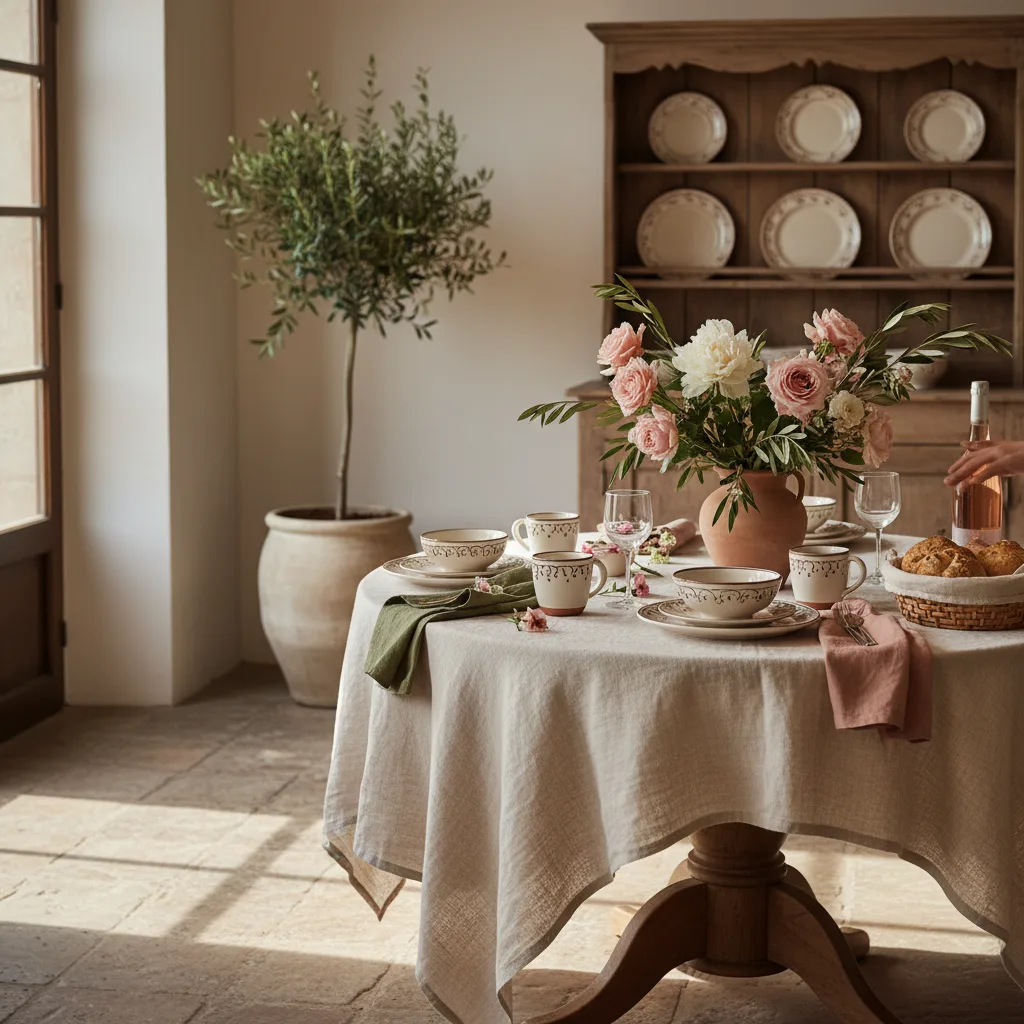
Why the Table Is the Best Gift (and Not a Plan B)
There's a tendency to think that if you give a homemade experience it's because you didn't have time to buy something. It's exactly the opposite. Preparing a special table for your mother takes more attention than clicking "add to cart". It means thinking about what she likes, which colours make her feel good, what kind of food she prefers, whether she likes flowers or candles, whether the table will be just for two or for the whole family.
In Italian culture, the Sunday table is not a logistical formality: it's the central act of the week. The family meal is prepared with time, presented with care and enjoyed without watching the clock. That philosophy fits perfectly with the spirit of Mother's Day — a moment to stop, to give thanks, to be present. And the table is the stage where all of that happens.
What's more, the pieces you use to dress that table stay with you. A decorative tray doesn't wear out like a bouquet of flowers. A beautiful ceramic bowl is still there every morning when your mother has breakfast. The gift isn't just the Sunday meal: it's every time those pieces come back to the table.
Choose a Colour Palette (and Stick to It)
This is the step that makes the most difference and the one most people skip. You don't need to buy anything new if what you already have works as a chromatic set. The key is to decide on two or three tones before you start and keep them across every layer of the table: linen, tableware, napkins, centrepiece.
For a Mother's Day table in May, the palettes that work best are spring ones without tipping into the childish:
| Palette | Base tones | Accent | Feel |
|---|---|---|---|
| Dusty pink | Off-white, natural linen | Old rose, sage green | Feminine, warm, elegant |
| Citrus Mediterranean | Cream, ivory | Lemon yellow, olive green | Fresh, bright, vital |
| White and green | Pure white, off-white | Mixed greens (eucalyptus, rosemary, olive) | Clean, natural, sophisticated |
| Soft terracotta | Sand, beige | Terracotta, toasted sienna | Warm, organic, Italian |
A common mistake is wanting to cram in too many colours. If the tableware is white, the napkins pink and the centrepiece in greens and pinks, you already have a table with personality. There's no need to add a patterned tablecloth, plates in another colour and candles in a third tone. Visual coherence conveys care; excess conveys improvisation.
The Base: Table Linen That Changes the Perception
Before touching the plates, sort out what goes underneath. A natural linen tablecloth — no patterns, no laminated coating — turns an ordinary wooden table into a stage. If you don't have a tablecloth, some thick cotton or linen placemats do the same job with less commitment.
Napkins are the detail with the most impact for the least investment. Swapping paper for a fabric napkin — even a simple cotton one — raises the perception of the table by three levels. For Mother's Day, a napkin in old rose, sage green or off-white, folded into a simple rectangle on the plate, is enough. If you want one more touch: tie it with a sprig of rosemary or lavender. No swan shapes or complicated origami.
A trick the Italians have mastered: if the tablecloth is plain, the napkins can have texture or a colour that contrasts softly. If the tablecloth already has presence (a jacquard, a textured linen), the napkins are better plain. The goal is for the layers to converse, not compete.
The Centrepiece: Low, Spring-Like and Out of the Way
The Mother's Day centrepiece has to fulfil an emotional function — making your mother feel that someone made an effort — without becoming a wall between guests. The golden rule you already know if you've read the rule of 3 for centrepieces: it shouldn't exceed 25 cm in height so it doesn't block the conversation.
For a Mother's Day table in May, the best option is whatever is already in bloom: peonies, ranunculus, garden roses, lavender, flowering rosemary. You don't need a professional bouquet. Three or four stems cut from the garden or bought at the market, placed in a low white ceramic vase or a wide bowl, work better than an overloaded floral arrangement.
If flowers aren't your thing — or your mother's — there are alternatives that work just as well:
- Candles + fruit: a couple of natural wax candles (white or honey-toned) surrounded by lemons, figs or seasonal cherries. Simple, Mediterranean, beautiful.
- Greenery only: branches of eucalyptus, olive or rosemary laid horizontally across the table, no vase. Minimalist and fragrant.
- Decorative bowl: a ceramic bowl with fresh fruit — peaches, plums, grapes — works as a centrepiece and as dessert at the same time.
What doesn't work: centrepieces so tall that your mother has to lean over to see the person across from her. Or arrangements so wide that there's no room left for the serving dishes. If the table is round, a single central point is enough. If it's rectangular, two or three smaller elements spread along it give a better result, as we explain in centrepiece for round vs rectangular tables.
The Tableware: What You Already Have (Well Combined)
You don't need to buy new tableware for Mother's Day. What you need is to take out the good set — the one you keep for "special occasions" and that has spent years gathering dust in the cabinet. This is the special occasion.
If your everyday tableware is white and plain, you already have the best possible base. White works with any palette, any napkin style and any centrepiece. What you can do to elevate it is add a piece that breaks the monotony: a wooden charger plate underneath, a ceramic dessert plate with an artisan glaze on top, a small bread bowl with a different texture.
The Italian key worth copying: mix with judgement, don't uniform. A complete set of 12 identical pieces conveys hotel or catering. Two or three families of pieces that share a tone but not an exact design convey a home with personality. It's the difference between "I bought this all at once" and "I built this table over time".
If this year you do want to give something tangible in addition to the meal, a piece of Italian tableware — a presentation plate, a serving dish, a set of bowls — is a gift your mother will use every week, not just that day. It's one of those housewarming gifts that also works for the home she's always had.
The Details That Make the Difference
The table is set: linen, tableware, centrepiece, a coherent colour palette. Now come the small gestures that separate a "nice" table from a table that moves people.
A Handwritten Card or Note
Don't underestimate the power of a folded piece of paper beside the plate with two lines written on it. "Thank you for all the dinners I never thanked you for." "Today I'm cooking." It seems like a small thing, but if you ask any mother which gift she remembers most over the years, it's almost always something written, not something bought.
The Place of Honour
If your mother normally sits in the most uncomfortable chair or the one furthest from the window (because she never minds, because she's always getting up to fetch things), change that today. The best spot, the best chair, the best view. And don't let her get up from the table even once.
Background Music
A soft playlist — it doesn't have to be Italian, although if you put on Paolo Conte or Mina nobody will complain — at conversation volume. Audible, but without anyone having to raise their voice. Music transforms the atmosphere as much as candles do.
Dessert on Special Tableware
If there's one moment to bring out the star piece, it's dessert. A decorative salad bowl or a ceramic dish with a homemade cake on top turns a simple sponge into the perfect close to the meal. The container elevates the contents.
Quick Guide: Step by Step for the Mother's Day Table
If you want an actionable summary, here is the full sequence in order:
Three days before:
- Decide the colour palette (two base tones + one accent)
- Check that you have clean, ironed table linen (or wash it in good time)
- Choose which tableware you're going to use and take it out
The day before:
- Buy the flowers or fruit for the centrepiece
- Prepare the handwritten card
- Confirm the menu and the time
That morning:
- Lay the tablecloth or the placemats
- Set out the plates, cutlery and glasses
- Build the centrepiece (flowers cut level with the vase, not too tall)
- Add fabric napkins and the card at each place
- Final touch: a lit candle if the meal is indoors
Just before sitting down:
- Serve the water and wine
- Put on the music
- Seat your mother in the place of honour
That's all you need. The table already speaks for you.
What to Give Besides the Table (If You Want Something Physical)
If preparing the table is your main gesture but you also want there to be something your mother can unwrap, tableware pieces are the gift most coherent with the experience. Giving any old vase is not the same as giving the vase you used for the centrepiece that day — and which is now hers forever.
Concrete ideas that work as a tangible gift within the table setting:
- A ceramic serving dish: useful every week, beautiful every day. If it's Italian ceramic with an artisan glaze, all the better.
- A set of bowls: for appetisers, for olives, for the breakfast porridge. A gift used daily.
- A vase: if you put flowers on the table, the vase is the gift. "The flowers wilt, the vase stays."
- A decorative tray: for breakfast in bed, for serving coffee after the meal, for organising the worktop.
What these ideas have in common is that they're not abstract gifts: they're pieces your mother will associate with that particular day every time she uses them. And that is far more powerful than any gift card.
Complementary pieces to complete the Mother's Day table or to give separately.
Frequently Asked Questions
How much time do I need to prepare a beautiful Mother's Day table? If you already have the basic pieces (tablecloth, tableware, fabric napkins), setting the table itself takes about 20-30 minutes. What requires more planning is deciding the colour palette, buying the flowers and writing the card. That's why we recommend starting the planning three days ahead and leaving the setting up for the morning of the day.
Can I set a beautiful table without buying anything new? Absolutely. Most homes have white tableware, a vase tucked away somewhere, fabric napkins that never get used and fruit in the kitchen. With those elements and a defined colour palette you can set a table that surprises. What matters is not the price of the pieces, but the coherence of the whole.
Which flowers are best for a May table? Peonies are the queens of May: full, with soft colours and a delicate scent. Ranunculus, garden roses, lavender and flowering rosemary also work very well. Ideally they should be seasonal and, if possible, from the local market — they last longer and smell better than refrigerated imports.
Indoor or outdoor table for Mother's Day? In Spain, May usually allows for eating outside. If you have a terrace, patio or garden, make the most of it: natural light makes any table look better, the tableware shines more and the atmosphere is more relaxed. If you eat indoors, move the table close to the window and let in as much light as possible.
What is the difference between decorating the table and tablescaping? Tablescaping is a trend that takes table decoration to an almost artistic level, with layers, textures and highly elaborate elements. What we propose here is simpler and more Italian: few pieces, well chosen, with chromatic and functional coherence. The goal is not a magazine photo but a table where you actually eat.