Brandani vs Bitossi: Which One Fits Your Home Better
If you're looking for Italian dinnerware brands with personality —and not yet another chain-store white dinner set—, chances are Brandani and Bitossi have shown up on your radar. Both are Tuscan, both have been around for decades and both have that touch of Italian design that lifts any table. But they're not interchangeable. Not in price, not in style, and not in what you'll find when you want to buy in Spain.
This guide compares the two brands without beating around the bush: what each one offers, who it fits best and when it's worth choosing one over the other. No artificial rankings or forced conclusions.
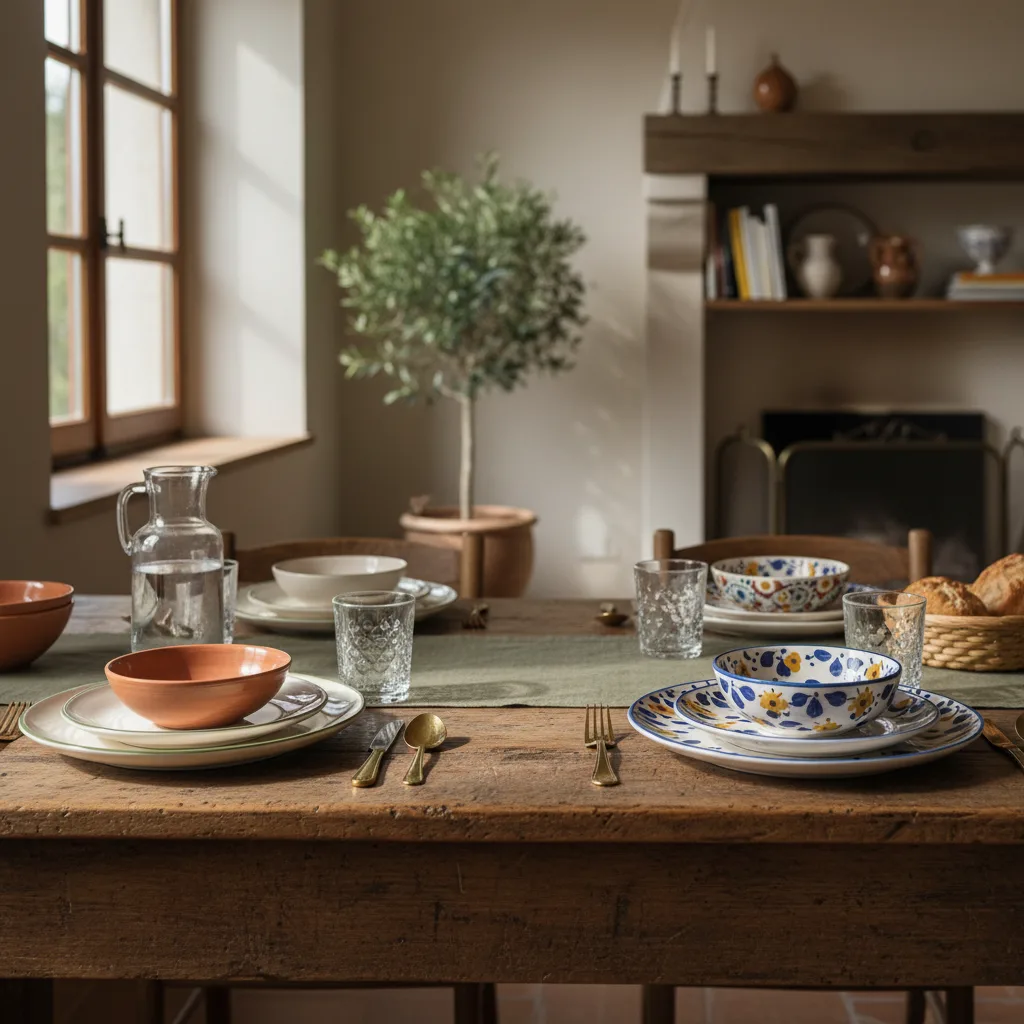
Two Tuscan brands, two very different philosophies
Brandani and Bitossi share an origin —Tuscany— and a raw material —ceramic, among others—, but that's where the resemblance ends. Understanding their history helps you understand why their products feel so different in the hand and on the table.
Brandani was born in 1976 in Pescia (Pistoia), continuing a family legacy that goes back to the early 20th century with "Brandani Enrico". From the start, its focus has been the complete home: kitchen, table, décor and gifts. They don't limit themselves to ceramic; they work with glass, stainless steel, melamine, bamboo, terracotta and blown glass. Their catalogue is broad, designed so you can find everything from a breakfast mug to a ceramic centrepiece that transforms your dining room.
Bitossi has a longer history and a different positioning. Founded in 1921 in Montelupo Fiorentino —Tuscany's quintessential pottery town—, the brand has always moved in the territory of designer pieces. Bitossi Ceramiche is the more artistic line, with collaborations with names such as Ettore Sottsass and Aldo Londi. Bitossi Home, its tableware line, proposes what they call the Tavola Scomposta (deconstructed table): mixing pieces from different collections to create a table with its own personality.
These are two ways of understanding the Italian table. One more functional and accessible; the other more artistic and aspirational.
Head-to-head: materials, catalogue and price
This is where the differences really show. We've organised the criteria that matter most when it comes to deciding.
| Criterion | Brandani | Bitossi Home |
|---|---|---|
| Founded | 1976 (legacy since the early 20th century) | 1921 |
| Headquarters | Pescia (Pistoia), Tuscany | Montelupo Fiorentino (Florence), Tuscany |
| Main materials | Ceramic, glass, melamine, steel, bamboo, terracotta | Ceramic, glass, metal |
| Type of catalogue | Broad: kitchen, table, décor, baby, gifts | More focused: table, kitchen and décor |
| Design style | Elegant-functional, themed collections, floral and Mediterranean inspiration | Artistic, colourful, designer collaborations, vintage-contemporary aesthetic |
| Price range (approx. RRP) | €15–€120 | €20–€300 |
| Natural audience | Those seeking Italian design for everyday use and gifting | Those seeking designer pieces with artistic personality |
| Availability in Spain | Specialist online store (Vita Italian Living) + partial Amazon | Design retailers, specialist shops, direct online |
| Certifications | FSC (packaging), SA8000 (ethics) | — |
| Ideal for gifting | Yes — careful packaging, accessible price point | Depends — higher price point, more collector-oriented pieces |
The difference in price range isn't just a matter of "expensive vs. cheap". It reflects two models: Brandani designs so you can use its pieces every day without worry; Bitossi designs so that each piece is an aesthetic statement. Neither approach is better —it depends on what you need.
Design and aesthetics: functional vs. artistic
The Brandani style
Brandani works with themed collections that refresh by season: Flora, Georgette, Wonderland, Risveglio... Each has its own palette and narrative, but always within accessible territory. Its pieces combine well with one another and with what you already have at home. It's Italian design made to be lived with, not to be displayed behind glass.
If you're interested in learning how to set an authentic Italian table, Brandani pieces are the most logical starting point: they let you build a table with character without needing a master's degree in interior design.
Its Cucina & Techno line adds a plus that Bitossi doesn't have: small designer countertop appliances. Toasters, kettles and blenders you don't need to hide when guests come over.
The Bitossi style
Bitossi Home moves in a different register. Its collections are born from collaborations with contemporary designers and artists. The aesthetic plays with contrast: a mix of vivid colours, shapes that break expectations, glazes that tell a story. The line created with Funky Table (an eclectic Milanese shop) is a good example: pieces with humour, irreverence and a vintage touch you won't find in any department store.
The concept of the Tavola Scomposta sums up the philosophy well: instead of buying a complete set where everything matches, you buy individual pieces that "clash" gracefully. It's a bold aesthetic bet that works very well if you have a visual eye — and that can turn out chaotic if you don't.
Who each brand fits
It's not about which is "better" — it's about which solves your real need. These are the most common scenarios.
Choose Brandani if...
- You want to refresh your dinnerware or homeware with Italian design without breaking the budget (average price point €40–€60).
- You're looking for a housewarming gift or a wedding gift with careful presentation and a reasonable price.
- You like the Mediterranean aesthetic but need practical pieces for everyday use: dishwasher safe, durable, functional.
- You want access to the full catalogue in Spain, with customer service in Spanish and nationwide shipping.
- You value ethical and environmental certifications (SA8000, FSC packaging).
Brandani dinnerware set for gifting
Choose Bitossi if...
- Your priority is the piece as a design object, not just as a utensil.
- You have a larger budget and are looking for designer pieces with history and a signature.
- You're drawn to the idea of collecting ceramics and mixing different collections on the same table.
- You already have your everyday dinnerware sorted and are looking for special pieces for specific occasions or as décor.
- You move in the world of interior design or architecture and know the design references Bitossi works with.
And if you like both?
There's a third option that works very well: use Brandani as the base of your everyday table and add individual Bitossi pieces as accents. An artistic Bitossi bowl on a Brandani table creates a contrast that elevates the whole without blowing the budget. It's the same principle you'd apply combining vases of different materials in a living room: pieces of different lines that talk to each other.
What other comparisons don't tell you
Most articles about Italian dinnerware simply list brands. Here are the nuances that matter when you're actually going to buy.
Real availability in Spain
This is a decisive factor that many guides ignore. Brandani has a specialist online store in Spain — Vita Italian Living — which means the full catalogue, nationwide shipping and service in Spanish. With Bitossi, buying in Spain goes through design retailers (with limited stock) or by ordering directly from Italy (in Italian, with longer delivery times).
If you value being able to return a product without international paperwork or you need it to arrive in time for an occasion, logistics make the difference.
The "real Made in Italy" factor
Both brands are authentically Italian — they manufacture in Italy, they design in Italy. But in a market full of imitations and misleading labelling, it's worth knowing how to tell a real Made in Italy from a fake one. Buying from specialist stores or directly from the brand is the only real guarantee of authenticity.
Resale and long-term value
Bitossi, especially the Bitossi Ceramiche pieces (the more artistic line), has an active collector's market. Vintage pieces by Aldo Londi or Ettore Sottsass fetch prices at auctions and design shops. Brandani doesn't play on that field — its pieces are designed to be used, not to appreciate in value. That doesn't make them worse; it makes them different. If what you're after is dinnerware that lasts 20 years of real use, Brandani's functional approach may make more sense.
Quick checklist: Brandani vs Bitossi
Before you decide, run through these points:
- Budget: Are you looking for pieces between €15 and €80 (Brandani) or between €40 and €300 (Bitossi)?
- Main use: Everyday table and gifting, or decorative and collector's piece?
- Style: Do you prefer functional elegance or designer pieces with strong personality?
- Availability: Do you need to buy it in Spain with fast shipping and service in Spanish?
- Catalogue: Are you looking only for dinnerware or also kitchen, décor, baby and gifts?
- Combinability: Do you want pieces that combine easily with what you already have, or pieces that break the mould and stand out?
If you've ticked more boxes on the Brandani side, explore the full catalogue at Vita Italian Living. If the balance tips towards Bitossi, look for its pieces in specialist design shops or directly at bitossihome.it.
Other Italian brands you should know
If you're researching Italian dinnerware brands, you're probably interested in widening the map. These are the ones that come up most often in the same conversation:
- Alessi (1921): iconic industrial design, designer pieces in steel and porcelain. High price, more decorative than functional in focus.
- Richard Ginori (1735): fine luxury porcelain, centuries-old history. Premium-high range, oriented towards formal tables.
- Tognana (1946): functional ceramic and porcelain, good value for money. Better known in Italy than in Spain.
- Seletti (1964): pop, irreverent design, statement pieces. Comparable to Bitossi in spirit but more accessible.
- Bormioli Rocco (1825): glassware and glass. A benchmark in tumblers and stemware, less so in dinnerware.
If you want to dig into the full landscape, we have a guide dedicated to the best premium Italian homeware brands.
Our honest recommendation
As an online store specialising in Brandani, we're not going to pretend to be neutral — but we will be honest.
If you're looking for Italian dinnerware with design, quality and a price that doesn't sting to refresh your table or to make a gift with personality, Brandani is probably the best entry point into the world of Italian homeware. Its catalogue is broad, its pieces are made to be used (not just admired) and you can buy the full catalogue in Spain with no middlemen and no surprises.
If what drives you is designer pieces, ceramic collecting, or you want jewel-like pieces that take centre stage on your table, Bitossi is an extraordinary brand well worth exploring — knowing that the price point is higher and buying in Spain takes a bit more effort.
And if you're someone who enjoys setting a table with pieces from different sources, combining both is a smart strategy. Brandani base, Bitossi accents. The best of both worlds, without breaking the bank. Discover the history of Brandani and its 75 years of the Italian table to understand why this brand remains relevant.
Complementary pieces to complete an Italian table with personality
Frequently asked questions
Are Brandani and Bitossi from the same company? No. They are two independent companies, both based in Tuscany, Italy. Brandani operates out of Pescia (Pistoia) and Bitossi out of Montelupo Fiorentino (Florence). They share a regional origin but have completely different histories, catalogues and design philosophies.
Where can I buy Brandani in Spain? Vita Italian Living is the Brandani online store in Spain. It offers the full catalogue with nationwide shipping and customer service in Spanish. You can also find a partial selection on Amazon ES, but with no guarantee of the full catalogue or gift packaging.
Are Brandani dinnerware pieces dishwasher and microwave safe? It depends on the line and the material. Brandani's porcelain and ceramic collections are usually dishwasher safe. Melamine pieces are dishwasher safe but not microwave safe. Always check the product page for the specific piece.
Is Bitossi more expensive than Brandani? In general, yes. Bitossi Home's price range runs from €20 to €300, while Brandani sits between €15 and €120. The difference reflects each brand's positioning: Bitossi leans more towards designer pieces and Brandani towards functionality with accessible design.
Can I mix Brandani and Bitossi pieces on the same table? Yes, and in fact it can look great. The key is to keep a consistent colour palette or material. Use Brandani as the base (plates, cutlery, glasses) and add one or two Bitossi pieces as an accent — a bowl, a dessert plate, a centrepiece.