How to Choose Decorative Tableware That Lasts 20 Years
Designer tableware isn't just an aesthetic matter. It's one of those home decisions you make only a few times in your life and that, if you get it right, stays with you for decades. The problem is that most people choose decorative tableware based on the catalogue photo, on a sale-time impulse or because "it looked lovely in the shop". And two years later, the plates are chipped, the glaze has lost its shine and the design that seemed so modern now looks dated.
Choosing well isn't a matter of spending more. It's a matter of knowing what to look for before you buy. In this guide you'll find the real criteria —material, finish, timeless design and compatibility with your daily life— so your next set of tableware is still your favourite twenty years from now.
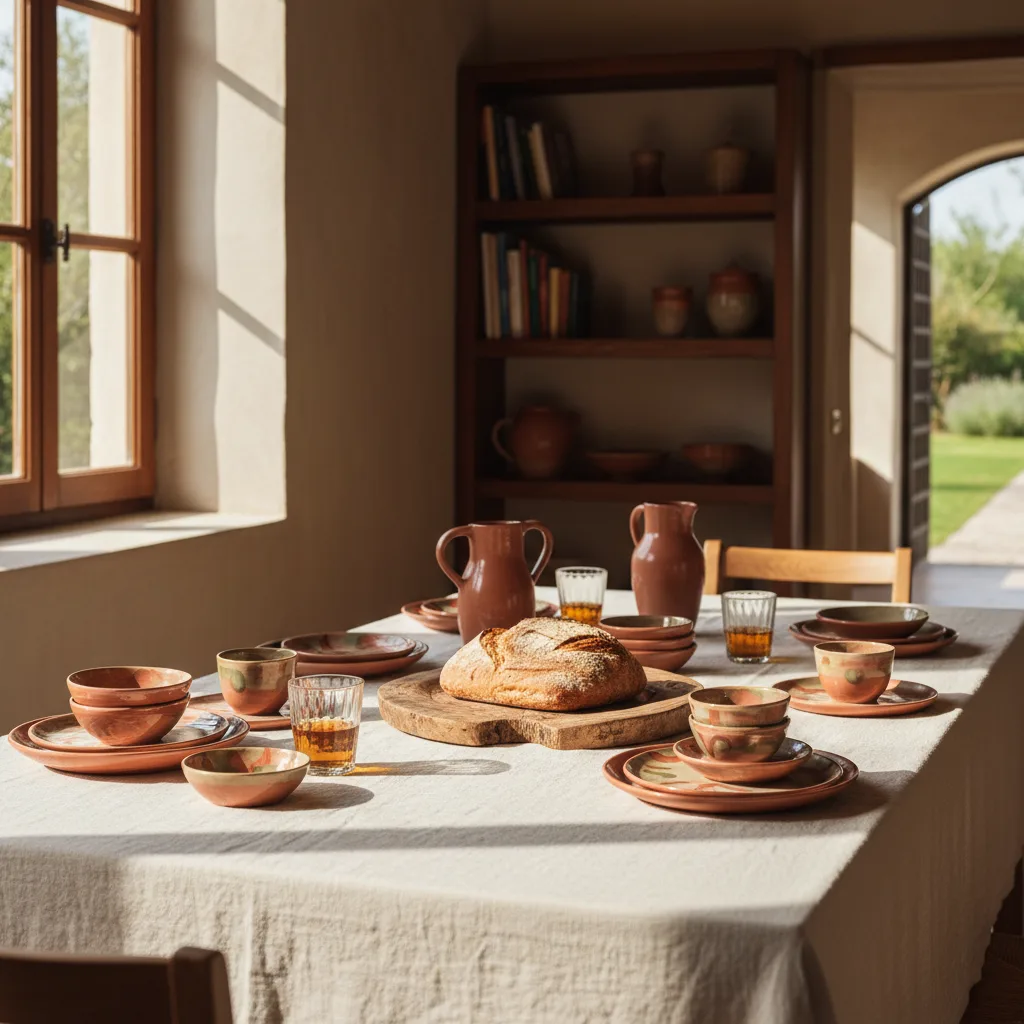
The material decides everything (or almost everything)
When someone asks "which tableware should I buy?", the answer always starts with the material. Not the colour, not the brand, not the price. The material determines how long your tableware will last, how it will age, whether it can go in the dishwasher without drama and whether the design will keep its original look or degrade with use.
There are four main materials in quality tableware, and each has a different profile. The important thing is that you understand what you're buying and what you need it for.
Porcelain: the classic option that never disappoints
Porcelain has graced tables for centuries for a reason. It's fired at very high temperatures (above 1,300 °C), which gives it a dense, resistant structure with a natural shine that needs no tricks. It's light for how resistant it is, and its non-porous surface means it doesn't absorb odours or stains. If you're after elegance and durability in equal measure, porcelain remains the benchmark.
Its weak point: thin edges can chip with sharp knocks. If you have small children or very intensive use, bear that in mind. But a well-made porcelain, properly cared for, literally lasts decades without losing presence.
Ceramic and stoneware: character with resistance
Ceramic is the most versatile material on the market. Within this family, stoneware stands out for its mechanical strength: it's fired at high temperatures, it's dense and it withstands daily wear without trouble. It's the material chosen by many Italian design brands —including Brandani— because it allows artisanal finishes with textures, reactive glazes and tones that can only be achieved through careful ceramic processes.
Quality ceramic handles the dishwasher, the microwave and no-nonsense use. Cheap ceramic doesn't. That's the difference you don't see in the catalogue photo but that becomes obvious by the second month of use.
Tempered glass: resistant but limited in design
Tempered glass (like Duralex or Luminarc) is practically indestructible and very functional. If your absolute priority is impact resistance, it's an honest option. However, the decorative possibilities are limited: basic shapes, little room for texture and a look that rarely conveys warmth or personality. For everyday family use it's impeccable; as decorative tableware with character, it falls short.
Bone china: fragile luxury
Bone china is the most refined option: translucent, delicate, with an almost otherworldly finish. It's the tableware of grand occasions, but its fragility makes it a poor candidate for everyday use. If you're going to use it four times a year, it may be worth it. If you're looking for something to live with, there are more sensible options.
| Material | Everyday durability | Decorative potential | Dishwasher | Ideal for… |
|---|---|---|---|---|
| Porcelain | High | High | Yes (most) | An elegant table for frequent use |
| Stoneware / ceramic | Very high | Very high | Yes (medium-high quality) | Everyday use with personality |
| Tempered glass | Very high | Low | Yes | Families, intensive use |
| Bone china | Low | High | With caution | Special occasions |
Five quality signs you can check before buying
You don't need to be a ceramics expert to tell quality tableware from something that will disappoint you. There are concrete signs you can verify even when buying online, if you know what to look for.
Glaze uniformity. Run your hand over the surface. A quality glaze is uniform, with no bubbles, no rough patches or irregularities that betray a poor firing. In artisanal pieces, small variations in tone are intentional and desirable; bubbles or craters are not.
Weight and density. A well-made piece has a weight proportionate to its size. If a dinner plate feels too light, the wall is probably thin and the clay body low in density. That means less resistance and a shorter lifespan. Italian stoneware sets, for example, have a reassuring weight that conveys solidity without being clunky.
Sound when tapped. Gently tap the edge with your knuckle. Quality porcelain produces a clear, high-pitched sound, almost metallic. Well-fired ceramic rings clean. If the sound is dull or muffled, the piece may have internal microcracks or an inadequate firing.
Base and footing. Turn the plate over. The base should be well finished, with no burrs that scratch your table or irregularities that make the plate wobble. On branded tableware, the base carries the manufacturer's mark —a statement of confidence in the product.
Resistance of the decoration. If the tableware has decorative motifs, ask (or read the product sheet) whether the decoration is under the glaze or over it. Under-glaze decoration is protected and lasts the entire life of the piece. Over-glaze decoration is more vulnerable to the dishwasher and to abrasion. This difference alone can determine whether your decorative tableware is still decorative ten years from now or turns into a faded set.
Timeless design vs. trendy design: the trap of what's fashionable
This is where most people make the most expensive mistake. You buy a set of tableware because the colour of the year has won you over, because organic shapes are in every magazine or because an influencer has made it trendy. Two seasons later, that tableware screams "2024" and you want something different.
The tableware that lasts twenty years isn't the one that follows the trend of the moment. It's the one with a design of its own, balanced shapes and colours that don't depend on a seasonal palette. Warm whites, earth tones, deep blues, olive greens: these are colours that have graced Mediterranean tables for centuries because they work with everything and never tire.
Italian design has a historical advantage here. Brands like Brandani have been designing tableware for more than 75 years, and their catalogue evolves without breaking with an aesthetic that is recognisable and consistent. It's no accident: the Italian ceramic tradition understands that design should serve everyday life, not the other way around. A piece with authentic Mediterranean character ages well because it wasn't born of a passing trend, but of a table culture with centuries of history.
If you want a practical rule: picture your tableware on a table ten years from now. If it only works with the décor you have right now, it probably isn't timeless. If it works with a linen tablecloth, with a rustic wooden table and with a centrepiece of fresh flowers just as well as with your current kitchen, you're on the right track.
Compatibility with your real life: dishwasher, microwave and the Tuesday test
The most beautiful tableware in the world is useless if you can't use it. This is a criterion that many articles about designer tableware leave out, perhaps because it isn't glamorous. But it's decisive.
Before you buy, ask yourself these questions: Can I put this tableware in the dishwasher without it losing the glaze or the decoration? Can I heat up Tuesday's leftovers in the microwave with these plates? If a piece of cutlery drops on it, will it chip at the first knock?
The tableware you buy "for everyday" and the one you buy "for when guests come over" should be the same. That's the philosophy of the Italian laid table: you don't save the good stuff for special occasions. You use the good stuff always, because eating is an occasion in itself. If a set of tableware can't handle your real life, it isn't good tableware —no matter how decorative it is.
Medium-to-high-range Italian brands like Brandani design with this in mind: pieces that are beautiful at a dinner with friends and resistant for Monday's breakfast. That double life is, probably, the best indicator that you're looking at tableware that's going to last.
The pre-purchase checklist
- Dishwasher-safe: essential if you're going to use it daily.
- Microwave-safe: check that it has no metallic finishes.
- Chip resistance: reinforced or slightly rounded edges last longer than ultra-thin edges.
- Replacement availability: can you buy individual pieces five years from now? Stable collections from established brands allow this; limited editions from fast-deco chains don't.
- Combinability: can you mix this tableware with pieces from another collection without clashing? Neutral tones and classic shapes are the most combinable.
Mistakes that shorten the life of any tableware
Even quality tableware can last half as long as it should if you treat it badly. And I'm not talking about throwing plates on the floor, but about everyday habits that go unnoticed.
Stacking without protection. If you stack plates directly, the bottom of one rubs against the surface of the one below. Over time, that creates micro-scratches that dull the glaze. A felt separator or a simple cloth between plates noticeably extends the life of the finish.
Sudden temperature changes. Taking a plate out of the fridge and putting it in the oven (or vice versa) creates a thermal shock that can crack the piece. Let it reach room temperature for a few minutes. It's a minimal gesture with an enormous impact on durability.
Using abrasive scourers. Glaze is hard, but not indestructible. Metal scourers or products with abrasive particles scratch the surface and speed up deterioration. A soft sponge and mild soap are all that good tableware needs.
Ignoring the manufacturer's instructions. It seems obvious, but it isn't. If the product sheet says "not dishwasher-safe", it isn't a suggestion. If it says "hand washing recommended", the over-glaze decoration will thank you for it. The care instructions for ceramics apply to tableware too.
How much to invest (and why cheap ends up expensive)
Genuinely quality designer tableware for four people usually ranges between €80 and €200, depending on the material, the brand and the number of pieces. Is that more than bargain-store tableware? Yes. Is it worth it? Let's do the maths.
Cheap tableware that lasts three years and gets replaced will cost you, over twenty years, between five and six sets. Adding it all up, you'll have spent more than on a single set of quality tableware that's still intact. And we haven't counted the aesthetic factor: every time you open the cupboard and see chipped plates or a worn-off design, there's an invisible cost to your home experience.
The real investment isn't the purchase price. It's the price divided by the years it's going to last. An Italian stoneware set that costs €150 and lasts twenty years works out at €7.50 a year. A chain-store set that costs €40 and lasts three works out at €13.30 a year. The numbers speak for themselves.
That said: expensive doesn't always mean good. Some brands charge a premium for the name without the product justifying it. The quality criteria we've covered —material, glaze, finish, timeless design, compatibility with daily use— are your best filter, regardless of price.
Where to find designer tableware that ticks all these boxes
Big-box stores offer variety but rarely depth. You find lots of options, few with real judgement behind them. Shops specialising in Italian homeware, like Vita Italian Living, curate their catalogue with a different logic: each piece is there because it meets certain standards of design, material and manufacturing. It's not a marketplace where anything goes; it's a curation.
The advantage of buying from a specialist online store is twofold. First, you get access to the brand's full catalogue (not just the three references that make it to Amazon). Second, you have the guarantee of authenticity: you know that what you're buying is real Made in Italy, made by whoever claims to make it. In a market where Made in Italy imitations proliferate, that's no small detail.
If you're weighing up options, compare with judgement. We've written about the differences between Brandani and Bitossi and about the best premium Italian homeware brands so you can make an informed decision, not an impulsive one.
Table accessories that go with designer tableware: pieces that complete the experience of a well-laid table.
Frequently asked questions
Is ceramic or stoneware tableware better than porcelain for everyday use? It depends on the type of use. Quality stoneware is more resistant to knocks and has a warmer, more artisanal look. Porcelain is more elegant and lighter. Both materials are dishwasher-safe if the quality is good. For worry-free everyday use, stoneware tends to be the most practical option.
How do I know if decorative tableware will withstand the dishwasher? Look for the manufacturer's indication on the base of the plate or on the product sheet. Dishwasher and microwave symbols are mandatory on tableware marketed in the EU. If you can't find them, ask before buying. Under-glaze decoration holds up better than over-glaze decoration.
Is it worth buying Italian tableware over mass-market brands? If you're looking for pieces with character, artisanal finishes and a design you won't find repeated in every home, yes. Italian tableware from brands like Brandani combines ceramic tradition with contemporary design, and its durability justifies the price difference compared with chain-store options.
How often should you replace quality tableware? If the tableware is good quality and you care for it properly, there's no fixed replacement period. Many branded porcelain or stoneware sets last 15-25 years without losing functionality or aesthetics. Replacement is usually down to a change in taste, not wear and tear.
Can I mix pieces from different collections or brands? Yes, and in fact it's a growing trend. The key is to maintain consistency in the colour palette or in the type of material. Mixing Italian ceramic pieces in neutral tones with an accent piece works very well. What doesn't work is mixing radically opposite styles without a common thread.