The best premium Italian homeware brands
When you're looking for the best decorative tableware brands and Italian homeware, the landscape can feel confusing. There are names that have been around for a century, others that sound like unattainable luxury, and a few that pop up on Amazon without you being sure whether they're genuinely Italian or just carry a pretty label on a product made thousands of miles from Tuscany.
This guide brings order to the world of premium Italian homeware brands worth your attention. No made-up rankings or arbitrary scores: history, materials, style, price range and —most importantly— who each one is right for. Whether you're putting together your first table setting with a discerning eye or looking for a gift that isn't the usual one, you'll find real guidance here.
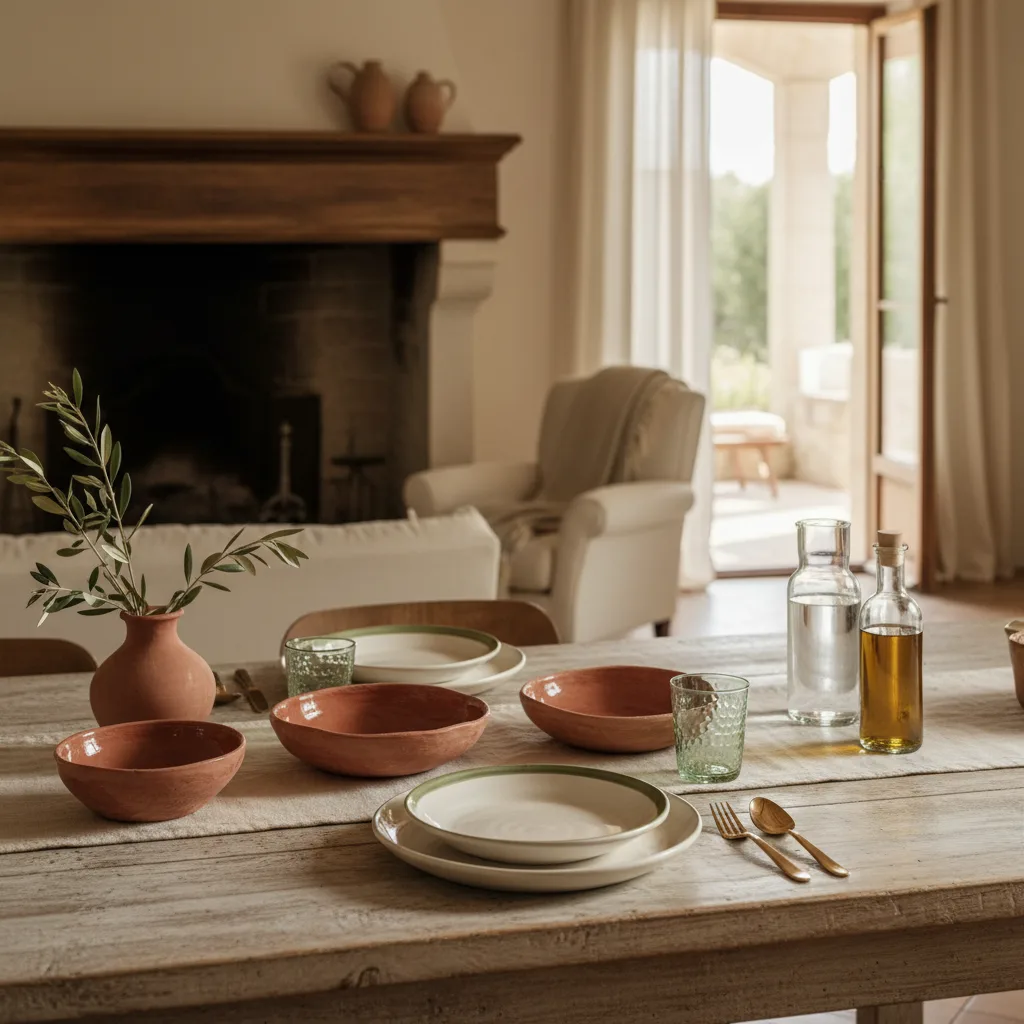
What makes a homeware brand "genuinely Italian"
Before getting into specific names, it's worth clarifying what Made in Italy really means in homeware. It's not just a geographic label: it implies an ecosystem of design, production and artisan tradition that sets authentic brands apart from opportunistic labeling.
A legitimate Italian homeware brand usually meets several criteria. It is headquartered and designed in Italy. It manufactures wholly or mostly on Italian soil —or in European workshops under direct supervision—. It works with materials such as ceramic, porcelain, blown glass, stainless steel or terracotta using techniques that, in many cases, have been perfected over decades. And it has a coherent product narrative: it isn't a brand that makes tableware today and sells phone cases tomorrow.
If you want to dig deeper into how to tell real origin from fake, the guide on real vs fake Made in Italy gives you the practical clues so you don't get fooled.
The premium Italian homeware brands you should know
The landscape is broad, so we've selected the brands that combine a real track record, recognizable design and reasonable availability in Spain. They're not ranked from best to worst: each occupies a different space.
Brandani — Italian design for everyday life
Brandani was founded in 1976 in Pescia (Pistoia), in Tuscany, although the family legacy dates back to the early 20th century with "Brandani Enrico". Its philosophy is clear: Italian design made for living, not for display behind glass. They work with ceramic, glass, stainless steel, melamine, bamboo and terracotta. The catalog spans kitchen, table, décor, a children's line and gifts.
What sets Brandani apart from other Italian brands is the breadth of its offering within an accessible price range (roughly between €15 and €120 RRP). You can build a complete table —from breakfast tableware to a centerpiece with character— without needing an interior designer's budget. On top of that, its Cucina & Techno line includes small tabletop appliances with design, something few Italian brands offer.
In Spain, Vita Italian Living is the online store specialising in Brandani, which means the full catalog, support in Spanish and nationwide shipping. On Amazon you'll only find a fraction of its collections.
Alessi — The Italian design factory
Founded in 1921 in Crusinallo (Piedmont), Alessi is probably the most internationally recognized Italian homeware brand. Its model is unique: it works with top-tier external designers —Philippe Starck, Michael Graves, Zaha Hadid— to create everyday objects that function as design pieces. Starck's Juicy Salif citrus squeezer and Richard Sapper's 9090 coffee maker are icons of 20th-century industrial design.
Alessi's signature material is stainless steel, although they also work with resins, porcelain and wood. Its price range runs from €20 for a bottle opener to over €300 for designer pieces. It's a brand for those who value design as a statement —and are willing to pay for it—. Distribution in Spain is wide: design stores, department stores and specialized online shops.
Bitossi Home — Tuscan designer ceramics
Bitossi was founded in 1921 in Montelupo Fiorentino, the epicenter of Tuscan ceramics. Its Bitossi Home line is aimed at the table with an artistic philosophy: collaborations with contemporary designers, expressive glazes and the concept of Tavola Scomposta (deconstructed table), where you mix pieces from different collections to create a personal composition.
The price ranges between €20 and €300, placing it in a more aspirational segment than Brandani. If you're interested in a detailed comparison between the two, the article Brandani vs Bitossi: which fits your home best gets into every nuance. Bitossi suits those with a clear aesthetic vision who are looking for pieces that are almost an artistic statement on the table.
Guzzini — Functional innovation since 1912
Fratelli Guzzini has been designing objects for the home for over a century from Recanati (Marche). Its specialty is combining material innovation with elegant functionality. They work a lot with acrylic, resins and high-quality plastics, which lets them create lightweight, colorful pieces suitable for outdoor use —something traditional ceramic doesn't offer—.
Guzzini is the brand to turn to if you're looking for salad bowls, fruit bowls, serving cutlery or table accessories that withstand heavy use without losing style. Its commitment to sustainability (EcoVadis medal) is a plus for those who value that dimension. The price range is accessible: between €10 and €80 for most pieces. Distribution in Spain is good through homeware stores and online.
Richard Ginori — Fine porcelain with three centuries of history
Founded in 1735 in Florence, Richard Ginori is the oldest brand in this selection and a global benchmark in luxury porcelain. Its dinnerware is defined by refined decoration: floral motifs, gold detailing, reliefs and a finish that reminds you that you're looking at a piece with almost three centuries of tradition.
Since 2013 it has belonged to the Kering group (the same as Gucci), which has strengthened its positioning in the high-end segment. Prices reflect that position: a single plate can exceed €100, and a complete dinner set runs into four-figure sums. It's homeware for special occasions, for collectors or for those who see tableware as family heritage to be passed down.
Ichendorf Milano — Blown glass with a contemporary soul
Ichendorf works hand-blown borosilicate glass from Milan. Its pieces —vases, glasses, bottles, decorative objects— have an ethereal, contemporary air that makes them unmistakable. Each piece is hand-blown in Italian workshops, which means no two are exactly alike.
The price range (between €15 and €120) makes it more accessible than its aesthetic suggests. If your interest leans more toward decorative vases than tableware, Ichendorf is an essential name.
Quick comparison: brand by brand
This table sums up the key criteria so you can get your bearings at a glance. Prices are approximate and indicative (RRP in Spain).
| Brand | Founded | Main material | Price range (RRP) | Style | Ideal for |
|---|---|---|---|---|---|
| Brandani | 1976 | Ceramic, glass, steel, bamboo | €15–€120 | Elegant-functional, Mediterranean | Everyday table with character, gifts |
| Alessi | 1921 | Stainless steel, resins | €20–€300+ | Designer, iconic | Those after signature objects |
| Bitossi Home | 1921 | Ceramic | €20–€300 | Artistic, colorful | Tables with artistic personality |
| Guzzini | 1912 | Acrylic, resins, premium plastic | €10–€80 | Functional, colorful, modern | Heavy daily use, outdoors |
| Richard Ginori | 1735 | Fine porcelain | €60–€500+ | Refined classic, ornamental | Collectors, family heirlooms |
| Ichendorf | — | Blown borosilicate glass | €15–€120 | Ethereal, contemporary | Vases and decorative pieces |
How to choose the brand that fits you
There's no such thing as "the best Italian homeware brand". There's the brand that fits your lifestyle, your budget and what you expect from your table. To help you find your way, think about these three questions.
Are you after everyday use or display pieces?
If you want to set a beautiful table every day —breakfasts, weekday meals, dinners with friends— without worrying about breaking something irreplaceable, Brandani and Guzzini are your territory. If you're after pieces that are almost works of art on the table, Bitossi and Alessi are closer to what you need.
What's your real budget?
Being honest about your budget avoids frustration. With €50 you can buy a significant piece from Brandani, Guzzini or Ichendorf. With €50 at Richard Ginori you barely reach a small bread plate. It's not a question of quality —it's a question of positioning—. The guide on how to choose decorative tableware that lasts 20 years digs into the criteria that determine real durability beyond price.
Do you need a broad catalog or individual pieces?
If you want to build a complete table —dinnerware, centerpiece, bowls, glasses, kitchen accessories— from a single brand with stylistic consistency, Brandani offers the widest range within a reasonable price bracket. If you'd rather go piece by piece, mixing brands with your own discernment, you can combine a Brandani centerpiece with Ichendorf glassware and Alessi cutlery. There are no rules: there are decisions.
To learn how to combine pieces from different styles without making the table look like a flea market, the article on how to set an authentic Italian table is a good starting point.
Where to buy authentic Italian homeware in Spain
Availability varies a lot depending on the brand. Some have wide distribution in Spain; others require buying from specialized stores or directly from Italy.
Brandani has a clear channel in Spain: Vita Italian Living is the online store specialising in the brand, which gives you access to the full catalog with support in Spanish, nationwide shipping and a guarantee of authenticity. On Amazon you'll find a limited selection and without a specialist's curation.
Alessi and Guzzini can be found in design stores, department stores like El Corte Inglés and online homeware shops. Availability is usually good.
Bitossi Home and Ichendorf are harder to find in Spanish physical retail. The options are usually specialized online stores or buying directly from Italy.
Richard Ginori moves in luxury circuits: Gucci boutiques, fine porcelain stores and platforms like Artemest.
If you're considering an alternative to the usual chains without blowing your budget, the article on the premium alternative to Maisons du Monde and Zara Home puts the options in perspective.
What no table tells you: the intangible factor
The numbers, materials and price ranges are useful for narrowing down options. But there's something you only sense when the piece is on your table: the feeling of using something made with intention. It's not mysticism —it's the difference between a plate designed to meet a production standard and one designed for someone to enjoy using—.
That intention shows in details that don't appear on the spec sheets. The weight of a well-balanced ceramic bowl. The way a blown-glass vase captures the light from the window. The feel of a glaze that someone chose from among dozens of options. It's what sets premium Italian homeware apart from homeware that only looks premium in the photo.
If you're just starting to explore this universe, you don't need to buy six different brands. Start with one piece that convinces you —a centerpiece, a set of bowls, a tray— and live with it. A table is built over time, not with a single purchase.
Complementary pieces to build a complete Italian table
Frequently asked questions
Which Italian homeware brand offers the best value for money? It depends on the use. For everyday tableware and gifts, Brandani offers the widest range between €15 and €120 with authentic Italian design. For functional pieces meant for heavy use, Guzzini is very competitive. The "best price" with no context means nothing: an Alessi piece at €80 can be an investment if you use it for 20 years.
How do I know if a homeware brand is genuinely Italian? Check that the headquarters are in Italy, that the design is Italian and that manufacturing takes place wholly or mostly on Italian or European soil under its supervision. Be wary of brands with an Italian name but no verifiable address, history or factory. The "Made in Italy" label is legally regulated in the EU.
Is it worth buying Italian homeware over chain brands like Zara Home? They are different propositions. Chains offer low prices and constant turnover, but the design is generic and durability is limited. Premium Italian homeware is built to last for years, has its own identity and you won't find it repeated in every home in your neighborhood. It's a matter of priorities, not of absolute budget.
Can I mix pieces from different Italian brands on the same table? Yes, and in fact it's the trend. The key is to keep consistency in one dimension (color, material or style) while varying the others. A ceramic centerpiece from Brandani pairs perfectly with Ichendorf glassware if you share a color palette or maintain a visual through-line.
Where can I buy Brandani in Spain with the full catalog? Vita Italian Living is the online store specialising in Brandani in Spain. That means access to the full catalog —not just the products that appear on Amazon—, support in Spanish and nationwide shipping.
Mini SEO checklist
- Keyword in H1 and in the first 120 words
- Correct slug (no capitals or accents, hyphens)
- Meta title maximum 60 characters
- Meta description 145–160 characters
- 5–8 suggested internal links
- JSON-LD BlogPosting included
- JSON-LD FAQPage included
- JSON-LD HowTo included (not applicable — not a step-by-step article)
- CTA aligned to the funnel (MOFU)